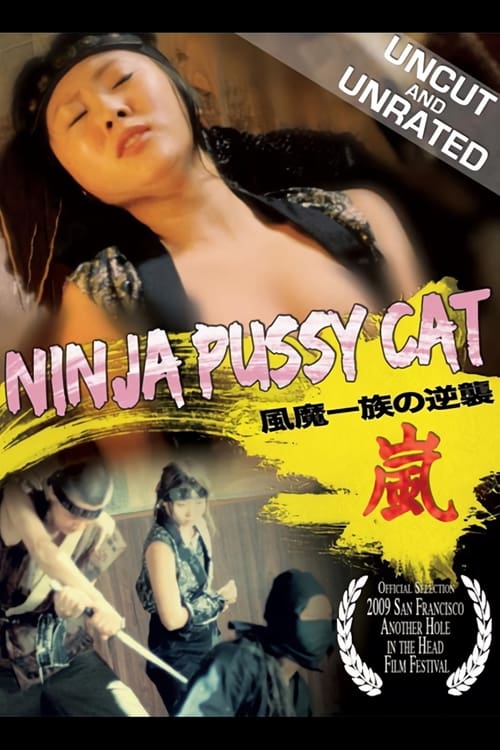
Ninja Pussy Cat
Plot
1580. Ninja Kotaro gets killed by the evil Hattori Hanzo after he discovers that the local shogun and his son aren't related. It's up to Kotaro's nubile and innocent virginal daughter Kaede to exact revenge on Hanzo for bumping off her dad. Kaede learns various lethal sexual martial arts techniques in order to accomplish this particular goal.
Get the Weekly Woke Watchlist
New and trending movies scored for woke bias, preachy messaging, and forced political themes — before you waste your evening.
No spam. One useful email per week.
Overall Series Review
Categorical Breakdown
The movie is a Japanese production set in 16th-century Japan; all characters are Japanese. The conflict is driven by a non-racialized feudal political secret and clan warfare. There is no vilification of 'whiteness,' forced diversity, or use of the intersectional lens as a plot device.
The narrative is an internal conflict within Japanese society concerning ninja clans and the legitimacy of the Shogunate's heir. The film does not express hostility toward Western civilization, its ancestors, or its heritage, as its focus is entirely on a specific historical/exploitation subgenre of Japanese cinema.
The female protagonist, Kaede, is the sole agent of change whose purpose is revenge. She gains a specialized form of ultimate power ('lethal sexual martial arts') that is used exclusively to defeat men, fitting the definition of female power gained through the emasculation/killing of males. This is a perverse form of the 'Girl Boss' trope where the woman is perfected and made lethal by her sexuality, and male characters are literally disempowered/killed by her intimate skill.
The primary relationships and sexual dynamics depicted, including the protagonist's love interest and the nature of the 'sexual martial arts,' are heterosexual. The plot structure adheres to a normative male-female pairing and revenge dynamic without incorporating alternative sexual or gender ideologies, queer theory, or any lecturing on modern gender identity.
The core of the movie is political maneuvering and a quest for personal revenge in a historical, feudal setting. The narrative does not contain any hostility toward religion, specifically Christianity, nor does it use faith or a spiritual vacuum as a central theme. The conflict is based on clear-cut good vs. evil figures with a focus on earthly power and justice.
Get the Weekly Woke Watchlist
New and trending movies scored for woke bias, preachy messaging, and forced political themes — before you waste your evening.
No spam. One useful email per week.