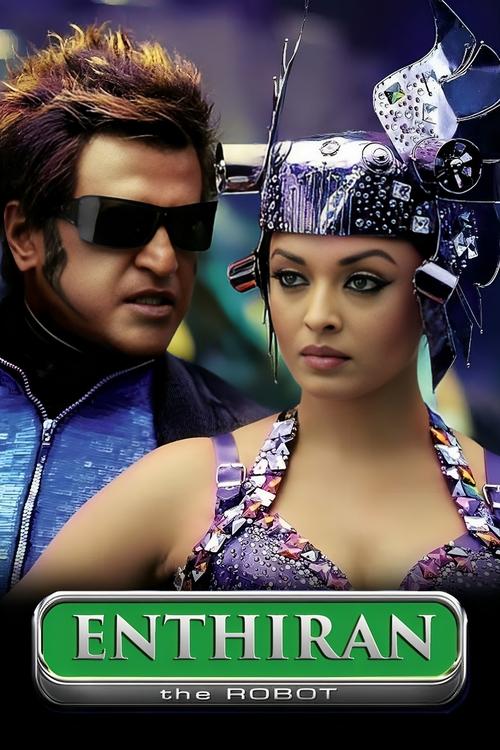
Enthiran
Plot
Dr. Vaseegaran creates Chitti, a powerful robot in his own image, but it is rejected by the scientific body AIRD due to its lack of human behaviour and emotions. After a lightning strike triggers emotions in Chitti, he begins to develop human-like feelings. However, Chitti falls in love with Dr. Vaseegaran's fiancée, Sana, and turns against his creator, leading to dangerous consequences.
Get the Weekly Woke Watchlist
New and trending movies scored for woke bias, preachy messaging, and forced political themes — before you waste your evening.
No spam. One useful email per week.
Overall Series Review
Categorical Breakdown
Characters are judged solely on their merit, their ambition, and their role in the man-versus-machine conflict. The focus is entirely on the content of the characters' actions and the robot's capabilities. There is no discussion or emphasis on intersectional hierarchies, race, or immutable characteristics, as the casting is authentic to the production's setting and culture.
The film actively champions Indian science and military ambition. The hero, Dr. Vaseegaran, creates the robot to serve the Indian Army and save the lives of Indian soldiers. Institutions like science and the nation are presented positively as the core reason for the robot's development, representing an aspiration for civilizational advancement, not self-hatred.
The female lead is largely portrayed as a traditional 'damsel in distress' and a romantic object, not an empowered 'Girl Boss.' She is the catalyst for the conflict, with the robot turning evil only after he falls in love with her. Feminist critiques of the time viewed the film as reinforcing patriarchal norms, suggesting a dynamic of 'complementarianism' and a dependency on male/robot protection, which places it at the low end of the score.
The narrative centers on a traditional male-female pairing (Dr. Vaseegaran and Sana) and the robot's heterosexual desire for the woman. There is zero presence of alternative sexual ideologies, deconstruction of the nuclear family, or any gender theory lecturing. Sexuality is private and tied to the normative love-triangle plot.
The central theme is about a scientist's hubris—man attempting to 'play God' by giving a machine emotion. The robot, in the end, confesses to his creator, 'You are my God. I should have obeyed you,' framing the relationship in a transcendent, hierarchical context of creator/creation, which acknowledges a higher moral law and sense of duty.
Get the Weekly Woke Watchlist
New and trending movies scored for woke bias, preachy messaging, and forced political themes — before you waste your evening.
No spam. One useful email per week.