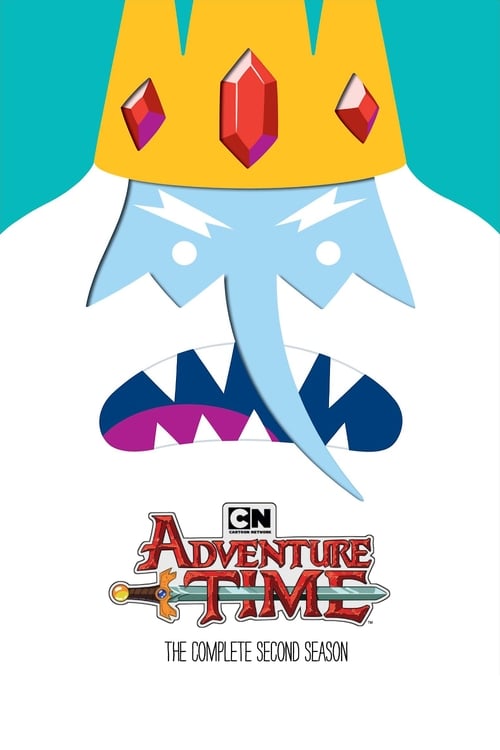
Adventure Time
Season 2 Analysis
Season Overview
No specific overview for this season.
Season Review
Categorical Breakdown
Characters are judged primarily by their competence and 'soul content,' not by race, as the cast is predominantly fantastical non-human entities. The only human, Finn, is a simple, earnest hero. Politics, when present, focus on the morality of institutional power (e.g., Princess Bubblegum’s monarchy) and not on a critique of identity-based systemic oppression. This avoids the high-scoring elements of intersectional lecturing.
The Land of Ooo is a world created after a catastrophic 'Mushroom War,' which deconstructs the audience's real-world history and civilization as something that failed and was destroyed. The show frames the remnants of the 'old world' (like The Lich) as the ultimate, existential evil. This sets up a narrative that is hostile toward the world's ancestors (humanity) and their failed civilization, though the new society in Ooo itself is viewed as chaotic and worth protecting.
Princess Bubblegum is consistently portrayed as an extremely intelligent scientist, political autocrat, and inventor whose primary fulfillment comes from her governance and experiments, actively rejecting the 'damsel' trope and numerous male suitors. Male characters like Finn and Jake are frequently shown as bumbling, goofy, or less intellectually capable than the main female leads. The show deliberately rejects 'archaic gender roles' for its characters, including Jake wearing makeup without comment, promoting a non-complementary and 'girl boss' dynamic.
The season contains early, but clear, examples of gender non-conformity that challenge the normative structure. Characters like BMO are ambiguously gendered and switch pronouns, and male characters like Jake are depicted applying makeup for fun, normalizing the concept of gender fluidity and non-standard expression without negative judgment. While the primary relationships featured are heterosexual (Finn/Bubblegum crush, Jake/Lady Rainicorn), the overall atmosphere and character design actively deconstruct binary gender reality.
Religious and spiritual conflict is not a main theme of the season. The show features abstract, fantasy-specific spiritual entities like Death and the cosmic villain The Lich, but there is no explicit hostility toward traditional religion, especially Christianity. Finn operates with a simple, heroic moral code of helping others, which reinforces a basic, objective sense of good versus evil without any direct anti-theistic lecturing.