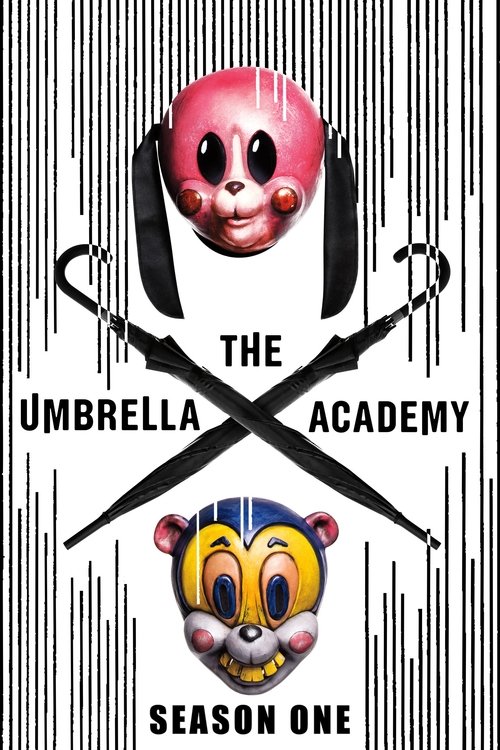
The Umbrella Academy
Season 1 Analysis
Season Overview
Reunited by their father's death, estranged siblings with extraordinary powers uncover shocking family secrets -- and a looming threat to humanity.
Season Review
Categorical Breakdown
The main cast of adopted siblings is intentionally cast with actors of different races, with three of the seven primary characters being people of color, which is a change from the original comic book. The narrative is entirely colorblind, meaning race is never mentioned as a factor in the characters' lives, but the diversity is a noticeable, manufactured addition to the source material. The most vilified character and the source of nearly all the family's problems is the patriarch, Sir Reginald Hargreeves, a wealthy, white, Western-archetype male.
The central institutional structure being critiqued is the family unit and the concept of the 'superhero institution' which is built on the cold, abusive principles of the patriarch. The series critiques the family home as fundamentally corrupting and traumatizing for its members, framing the adoptive father/ancestor figure as an 'asshole'. The critique is focused on the individual's failure as a father and the resulting familial chaos, rather than a broad indictment of Western society outside of this eccentric, abusive miniature institution.
The most powerful character in the family, Vanya, is a female character who starts the season as the powerless 'black sheep' and is revealed to be the apocalypse-causing force. Her tremendous power is directly linked to her suppressed emotions, playing into the trope of the powerful woman who is dangerous due to an inability to control her feelings. The other main female sibling, Allison, possesses a power of manipulating truth with her voice, which is graphically destroyed in a conflict with Vanya. The robot mother, Grace, is a submissive, nurturing figure who is subservient to the abusive male father.
One of the main siblings, Klaus, is non-heterosexual, and his character arc includes a significant flashback sequence where he falls in love with a male soldier named Dave while traveling back in time to the Vietnam War. This lost love becomes a major emotional anchor for his character and his substance abuse struggle. Klaus frequently wears women's clothing, and his gender non-conforming presentation is treated as a simple matter of fact by his siblings. The presence of alternative sexuality is integrated as a normal and significant part of a core character's identity.
The show is predominantly secular, with the moral philosophy revolving around the psychological effects of trauma and a fractured family dynamic. The primary antagonist is a time-travelling, bureaucratic organization called The Commission, not a religious entity. No traditional religious characters are present to be vilified, and the concepts of right and wrong are derived from individual connection and self-actualization, suggesting a subjective moral landscape rather than one based on objective, transcendent law.