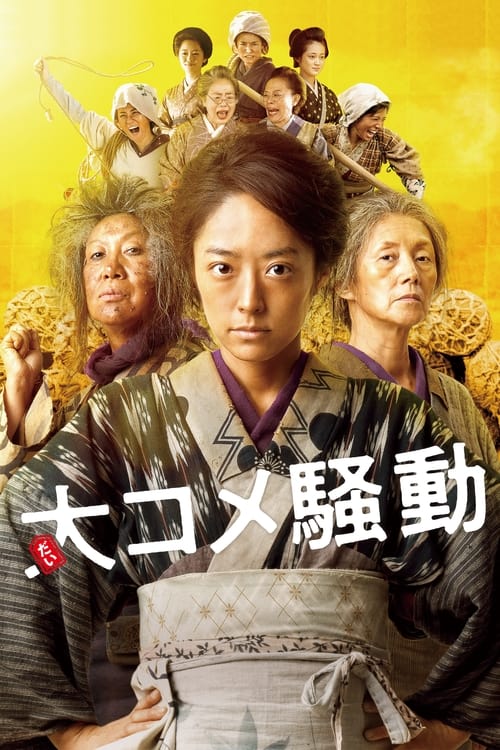
Angry Rice Wives
Plot
In August, 1918, Matsuura Ito lives in a coastal village of Toyama with her husband and three children. During the summer, there wasn't much fish to catch, so her husband has been far away from home to catch fish. To support herself and her children, Ito carries goods from ships like the other women in the village. Meanwhile, the residents encounter rising prices for rice. The women are unable to feed their family due to the high prices of rice. The women ask a nearby rice store to sell rice at lower prices, but it fails. The price of rice continues to rise daily. Due to an incident, Ito and the other village women step up to the plate.
Get the Weekly Woke Watchlist
New and trending movies scored for woke bias, preachy messaging, and forced political themes — before you waste your evening.
No spam. One useful email per week.
Overall Series Review
Categorical Breakdown
The central conflict is economic and class-based, pitting the impoverished working-class Japanese women against the wealthy merchants and government officials. There is no focus on the vilification of 'whiteness' or forced diversity. The score reflects a mild elevation of the poor, working-class woman as the identity-based hero against an oppressive class structure.
The film critiques specific instances of corruption, greed, and bad government policy within 1918 Imperial Japan. The women's actions are motivated by a desire to protect their homes and families, viewing these core institutions as shields against chaos and starvation. The narrative is pro-ancestor and pro-home culture, not self-hating.
The story centers the women's struggle and agency, with historical commentary noting the film simplifies the 1918 riots by 'airbrushing out male participation' to focus exclusively on the female protesters. This choice creates a 'Girl Boss' structure where the women are the sole heroes. However, their motivation is profoundly pro-natalist, focused on the protective role of motherhood and family survival, which counters the anti-natalism trope.
As a historical drama centered on an economic crisis and family survival in 1918 Japan, the movie contains no themes of sexual ideology, deconstruction of the nuclear family, or lecturing on gender theory. The narrative maintains the traditional male-female pairing and nuclear family as the normative structure of the time.
The film is a secular story focused on a material and political crisis. The morality is objective: greed and causing starvation are evil; fighting for your children's survival is righteous. There is no hostility toward traditional religion or embrace of subjective moral relativism.
Get the Weekly Woke Watchlist
New and trending movies scored for woke bias, preachy messaging, and forced political themes — before you waste your evening.
No spam. One useful email per week.