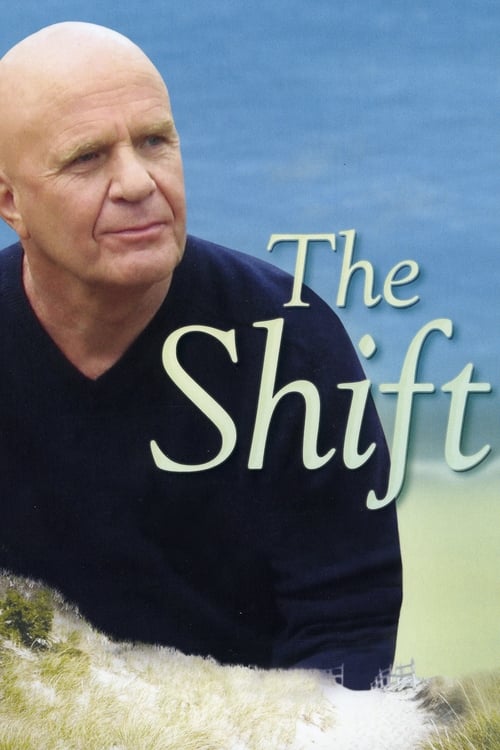
The Shift
Plot
From the creators of You Can Heal Your Life: The Movie comes a compelling portrait of three modern lives in need of new direction and new meaning. In his first-ever movie, Wayne Dyer explores the spiritual journey in the second half of life when we long to find the purpose that is our unique contribution to the world. The powerful shift from the ego constructs we are taught early in life by parents and society—which promote an emphasis on achievement and accumulation—are shown in contrast to a life of meaning, focused on serving and giving back. Filmed on coastal California’s spectacular Monterey Peninsula, The Shift captures every person’s mid-life longing for a more purposeful, soul-directed life.
Get the Weekly Woke Watchlist
New and trending movies scored for woke bias, preachy messaging, and forced political themes — before you waste your evening.
No spam. One useful email per week.
Overall Series Review
Categorical Breakdown
The film's central conflict revolves around the universal, internal struggle between ego/materialism and inner meaning/spirituality. The narrative focuses on character choices and spiritual merit, completely ignoring race, immutable characteristics, or intersectional hierarchy as a factor in the characters' problems or solutions. No evidence of vilification of whiteness or forced diversity exists; all characters are judged by their ambition and ego-driven nature.
The movie criticizes a modern, materialistic, and achievement-obsessed culture, describing it as 'ego constructs we are taught... by parents and society' that emphasize 'achievement and accumulation.' This is a critique of a *specific flaw* in modern Western culture (materialism) but not the civilization's foundational institutions (liberty, family, nation). The shift is toward personal service and finding purpose, which does not constitute self-hatred for the West or demonization of its ancestors, but rather a spiritual correction of its modern excess.
The film features a character who is a devoted wife and mother who feels her creative urges are stifled by the demands of her family. The message encourages this woman to find her unique calling and make a contribution, asserting that a woman's fulfillment is not *only* through her familial roles. This promotes female independence and creative expression but does not frame motherhood as a 'prison' or depict men as bumbling idiots or toxic; the male characters are flawed by their excessive ambition and materialism, a flaw shared universally in the film.
The narrative makes no mention of sexual identity, alternative sexualities, or gender ideology. The characters' core relationships are traditional male-female pairings dealing with mid-life crises and materialism. The sole focus is on the spiritual journey from ego to meaning, keeping all sexual and gender politics entirely private or absent from the public message.
The movie is explicitly pro-spiritual, promoting a search for 'meaning' and reconnection with a 'divine source' or 'Source,' which Wayne Dyer says can be called 'God' or 'Dao.' The film argues that a life lived from this spiritual core, characterized by virtues like kindness and service, is superior to a life of ego-driven ambition. This is a clear embrace of a Transcendent Morality and higher moral law, placing it at the very opposite end of the anti-theism scale.
Get the Weekly Woke Watchlist
New and trending movies scored for woke bias, preachy messaging, and forced political themes — before you waste your evening.
No spam. One useful email per week.