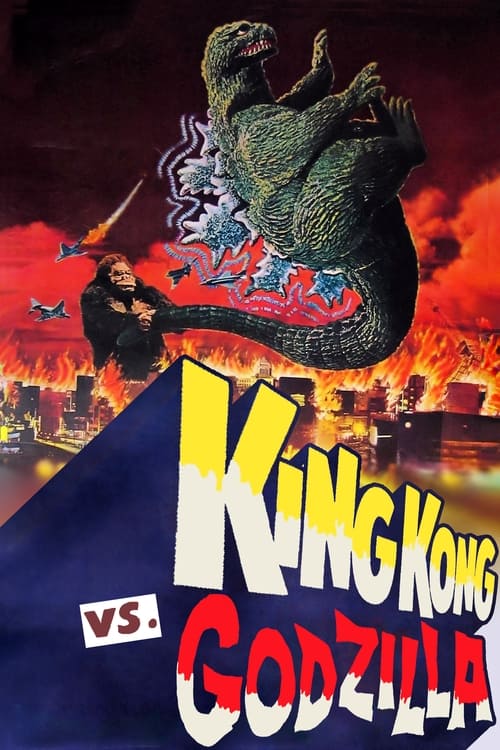
King Kong vs. Godzilla
Plot
The advertising director of Pacific Pharmaceuticals, frustrated with the low ratings of their sponsored TV program, seeks a more sensationalist approach. He orders his staff to Faro Island to capture King Kong for exploitation. As Godzilla re-emerges, a media frenzy generates with Pacific looking to capitalize off of the ultimate battle.
Get the Weekly Woke Watchlist
New and trending movies scored for woke bias, preachy messaging, and forced political themes — before you waste your evening.
No spam. One useful email per week.
Overall Series Review
Categorical Breakdown
The main cast of characters are Japanese, which is historically authentic to the film’s production and setting, and the conflict is not based on race or ethnicity but on corporate irresponsibility. The expedition to Faro Island for the purpose of monster exploitation is framed as a critique of colonialist resource extraction, though the islanders are presented using an outmoded ‘Noble Savage’ trope, including a brief instance of a ceremonial dance. There is no vilification of 'whiteness' and the Japanese corporate figures are portrayed as the primary villains based on their poor character and greed.
The film’s central theme is a sharp satire directed at the modern television industry and the corporate greed of Pacific Pharmaceuticals. This is a critique of a specific moral flaw within contemporary Japanese society—excessive commercialization—rather than a hostility toward its home culture or ancestors. The Japanese Self-Defense Force and scientists are shown with competence and dedication, upholding the national and civilizational order against the chaos caused by corporate hubris.
The gender dynamics are overwhelmingly traditional for the 1962 period. The primary female human role is that of Fumiko, the sister of a main character, who is kidnapped by King Kong and carried up a building, functioning as a classic 'damsel-in-distress' to motivate the male characters. Men in the film, particularly the corporate executive Tako, are shown as bumbling and morally bankrupt, but this is an *anti-corporate* and *pro-science* critique, not an *anti-male* or *emasculation* message.
The narrative operates entirely within a normative structure, centered on the spectacle of the two monsters fighting. There is no centering of alternative sexualities, no discussion of gender ideology, and the film does not engage in deconstruction of the nuclear family. Sexuality is entirely private and not a plot factor.
The film’s morality is centered around the objective harm caused by reckless corporate greed and the objective good of the military and scientific efforts to protect the population. Faith is not a major factor, with the exception of the Faro Island natives who worship Kong as a god, a depiction that serves a plot function. There is no hostility toward traditional religion, specifically Christianity, as the narrative remains secular and focused on societal duty and consequence.
Get the Weekly Woke Watchlist
New and trending movies scored for woke bias, preachy messaging, and forced political themes — before you waste your evening.
No spam. One useful email per week.