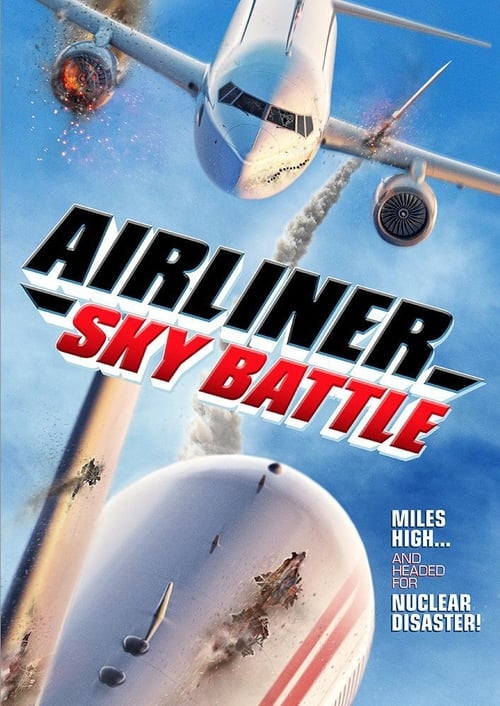
Airliner Sky Battle
Plot
Russian operatives hijack a commercial American jet, planning to crash it into a nuclear power plant near Washington, D.C. resulting in fallout that will devastate the Eastern seaboard. With little time for Air Force fighters to shoot it down, the passengers and crew aboard the aircraft must rely on their own military and civilian training to stop the terrorists before it's too late.
Get the Weekly Woke Watchlist
New and trending movies scored for woke bias, preachy messaging, and forced political themes — before you waste your evening.
No spam. One useful email per week.
Overall Series Review
Categorical Breakdown
Characters are judged by their 'military and civilian training' and competence, establishing a universal meritocracy. The heroes are a visibly diverse group of Americans (passengers and crew) united against an external, foreign threat, with no sign of lecturing on privilege or systemic oppression. The focus remains on shared skill and purpose.
The plot is a direct embrace of national defense, centered on American citizens actively fighting to prevent Russian terrorists from devastating Washington D.C. and the Eastern Seaboard. Core Western institutions (liberty, nation) are the values being actively shielded against chaos, which aligns with Gratitude and Chesterton’s Fence.
One of the key female characters steps up and 'takes the lead' in the crisis, demonstrating the 'Girl Boss' trope of female competence. However, this competence is consistently framed as relying on her 'training' and skills, not through the emasculation of male characters or a didactic lecture on gender. There is no anti-natal or anti-family messaging evident.
The narrative is entirely focused on the external threat of the hijacking and the action to stop it. There is no evidence of alternative sexualities being centered, deconstruction of the nuclear family, or the presence of gender ideology. The structure remains normative.
The conflict is purely political/action-based, revolving around a clear objective moral good (saving millions of lives) against an objective evil (foreign-sponsored mass murder). Faith and religion are neither a source of conflict nor a source of strength, but the existence of a higher moral law is implicitly acknowledged by the objective good vs. evil framing.
Get the Weekly Woke Watchlist
New and trending movies scored for woke bias, preachy messaging, and forced political themes — before you waste your evening.
No spam. One useful email per week.