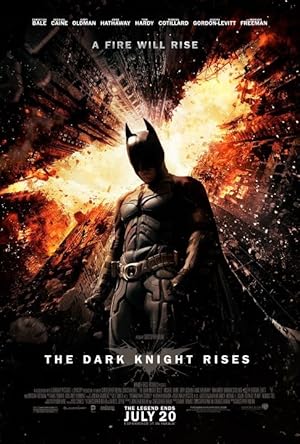
The Dark Knight Rises
Plot
Despite his tarnished reputation after the events of The Dark Knight (2008), in which he took the rap for Dent's crimes, Batman feels compelled to intervene to assist the city and its Police force, which is struggling to cope with Bane's plans to destroy the city.
Get the Weekly Woke Watchlist
New and trending movies scored for woke bias, preachy messaging, and forced political themes — before you waste your evening.
No spam. One useful email per week.
Overall Series Review
Categorical Breakdown
The narrative universally applies the test of merit and character, judging individuals based on their actions regardless of immutable characteristics. The character John Blake rises from beat cop to a successor figure based on his talent, dedication, and shared moral conviction with Bruce Wayne, emphasizing a meritocratic structure. The film avoids any narrative focus on race or intersectional hierarchy.
The film does not embrace civilizational self-hatred. It critiques the corruption and complacency within Gotham's elite and institutions but overwhelmingly frames the city—a stand-in for Western civilization—as something worth fighting for and saving. The antagonist's goal is the complete destruction of the city, and the hero’s mission is to defend its traditional structures and order.
Female leads are capable and complex, but the dynamics are complementary rather than purely oppositional to men. Selina Kyle (Catwoman) has agency as a capable anti-hero who is morally redeemed by joining the fight for order, eventually choosing a complementary partnership with Bruce Wayne over a lone 'Girl Boss' existence. Miranda Tate/Talia al Ghul, the true mastermind, is a powerful female antagonist whose central motive is revenge tied to her father's mission, not a lecture on female superiority. Masculinity (Batman's sacrifice and return) is not emasculated.
There is no presence of alternative sexualities or gender ideology being centered or promoted in the main narrative. The film affirms the traditional male-female pairing of Bruce Wayne and Selina Kyle as the endpoint of the protagonist's emotional arc.
The movie is heavily imbued with traditional transcendent morality. The entire third act is structured around a sacrificial act for the collective good, which many commentators interpret as Christological symbolism centered on themes of death, resurrection, and redemption. A Catholic boys' home is portrayed as a positive, stabilizing institution within the community, offering a positive depiction of faith's role.
Get the Weekly Woke Watchlist
New and trending movies scored for woke bias, preachy messaging, and forced political themes — before you waste your evening.
No spam. One useful email per week.