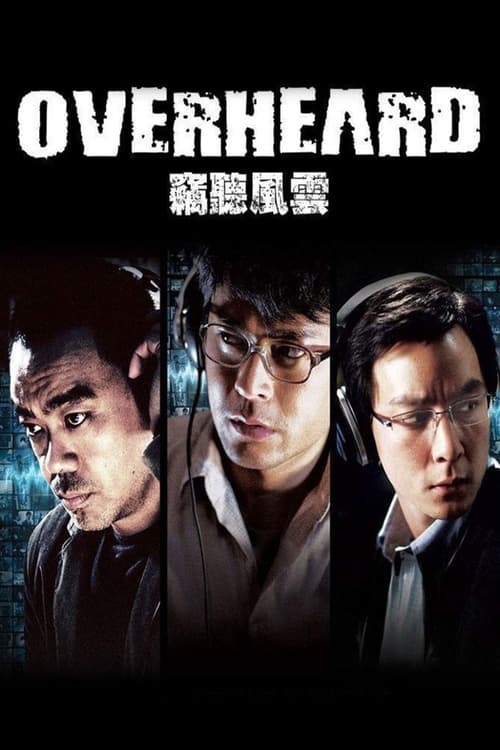
Overheard
Plot
The story revolves around three members of a police surveillance squad conducting an investigation into a financial investment group involved in criminal fraud. The focus of the plot, however, is actually on the three officers themselves who stumble upon an opportunity to capitalize on information they gathered during their surveillance.
Get the Weekly Woke Watchlist
New and trending movies scored for woke bias, preachy messaging, and forced political themes — before you waste your evening.
No spam. One useful email per week.
Overall Series Review
Categorical Breakdown
The film focuses entirely on the moral and financial choices of three male characters. Their race or other immutable characteristics are not a factor in the plot, which is an internal ethical struggle. Characters are judged solely by their actions and the content of their morality, which subverts their meritocratic positions as police officers.
The film is a Hong Kong production whose criticism is leveled at white-collar crime and corruption within the financial world and individual moral failure. It does not critique or express hostility toward Hong Kong or Chinese civilization, culture, or institutions as a whole. The film's conclusion, where justice is ultimately served, affirms the existence of a higher standard of law and order.
The core narrative is a male-centric story of 'blood brothers' and professional temptation. Female characters are primarily in traditional roles, such as the wife/mother supporting her sick son and the mistress in an affair subplot. There are no 'Girl Boss' or 'Mary Sue' tropes, and the concept of motherhood is used as a tragic catalyst for one male character's moral compromise (desire to provide for family), which is a celebration of the family unit, not a rejection of it.
The movie contains no content related to alternative sexualities, gender ideology, or the deconstruction of the nuclear family. The sexual dynamics that exist are between male-female pairings (marriage, engagement, and adultery), reflecting a normative structure that remains in the background of the main crime thriller plot.
The conflict and eventual retribution are entirely secular, focusing on criminal justice, police procedure, and the moral vacuum created by pure greed. There is no depiction or discussion of religion, and therefore no anti-theistic messaging or vilification of Christianity. The film operates on a clear, objective moral law where crime is shown to have severe and destructive consequences.
Get the Weekly Woke Watchlist
New and trending movies scored for woke bias, preachy messaging, and forced political themes — before you waste your evening.
No spam. One useful email per week.