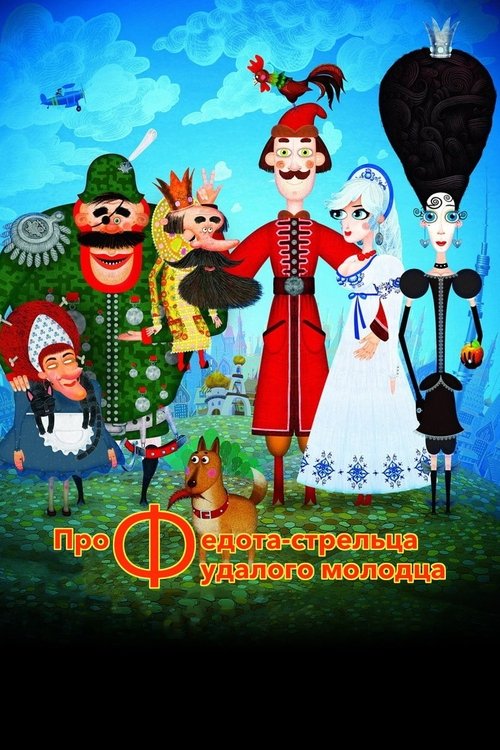
The Tale of Fedot, the Shooter
Plot
The king decided to bring a soldier to a nervous breakdown because he fell in love with soldier's wife.
Get the Weekly Woke Watchlist
New and trending movies scored for woke bias, preachy messaging, and forced political themes — before you waste your evening.
No spam. One useful email per week.
Overall Series Review
Categorical Breakdown
Characters are defined by their merit, such as Fedot’s skill as a shooter and his unwavering character. The villain is the King; his evil nature stems from his abuse of power and personal vice, not his race or any identity characteristic. Casting and setting are historically and culturally authentic to the Russian fairy tale genre.
The film satirizes the incompetence and corruption of the government, represented by the King and his General. This is an internal critique of political leadership, not a wholesale hostility toward the home culture. The narrative celebrates the common Russian man and woman, validating the traditional virtues and structure of the folklore.
The conflict centers on the hero defending his marriage to a clever and valued wife. Marusya, the wife, is a resourceful and vital component of the story, demonstrating intelligence and loyalty. The man, Fedot, is depicted as a protective, competent, and heroic figure. The film champions the preservation of the complementary family unit.
The story is solely focused on the traditional male-female pairing of Fedot and Marusya and the threat posed to their marriage. The narrative provides a normative structure where the nuclear family is the institution the hero fights to maintain. Sexual or gender ideology is not addressed or centered.
The film is a secular, social and political satire. The morality is based on an objective framework of justice: Fedot’s actions are righteous, and the King’s tyranny is unjust. The conflict does not involve any critique of traditional religion; faith is neither a source of conflict nor a primary theme.
Get the Weekly Woke Watchlist
New and trending movies scored for woke bias, preachy messaging, and forced political themes — before you waste your evening.
No spam. One useful email per week.