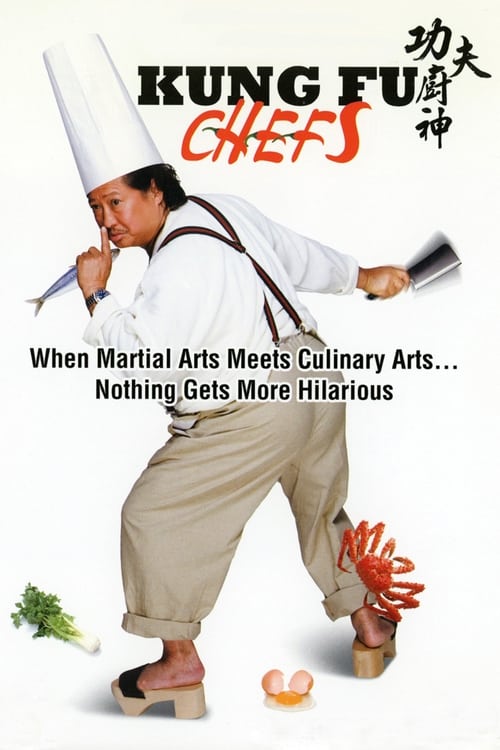
Kung Fu Chefs
Plot
Ousted chef Wong Bing-Yi is determined to help Shen Qing at her restaurant "Four Seas". He trains a young chef, Lung Kin-Yat to compete against Chef Tin, the head chef at "Imperial Palace", for the title of "Top Chef".
Get the Weekly Woke Watchlist
New and trending movies scored for woke bias, preachy messaging, and forced political themes — before you waste your evening.
No spam. One useful email per week.
Overall Series Review
Categorical Breakdown
The entire story revolves around the universal principles of culinary skill, martial arts competence, and personal honor. Characters are judged solely by their merits, actions, and character development, not by race or immutable characteristics. The casting is authentic to the Chinese cultural setting, which is a celebration of its own traditions.
The film acts as a cultural celebration, exalting Chinese cuisine (described as a 'metaphor for the Chinese soul') and the traditional art of Kung Fu. The plot respects the sacrifices and legacy of ancestors, as Master Wong Bing-Yi seeks to restore his own and his master's honor and pass on a family/clan heirloom (the Dragon-Head Cleaver). The conflict is an internal one (betrayal and corruption), not an attack on the civilization itself.
Gender roles are largely traditional. The female character, Shen Qing, is the owner and manager of the struggling restaurant, demonstrating agency, but she must rely on the male Master Wong Bing-Yi to take over the kitchen and train a male protagonist to win the main competition. This structure shows men and women in complementary, distinct roles, and the narrative does not contain anti-natalist messaging or 'Mary Sue' tropes.
The narrative follows a normative structure featuring a traditional male-female pairing as the main love interest. The film contains no focus on alternative sexualities, deconstruction of the nuclear family, or instruction on gender ideology.
The conflict is secular, dealing with honor, betrayal, and corrupt competition. The spiritual or moral element is tied to a transcendent morality of craft—the 'Zen art of cookery' and the honor code of martial arts. Traditional religion is neither attacked nor central to the plot; objective truth and higher moral law are implicitly acknowledged through the pursuit of excellence and justice.
Get the Weekly Woke Watchlist
New and trending movies scored for woke bias, preachy messaging, and forced political themes — before you waste your evening.
No spam. One useful email per week.