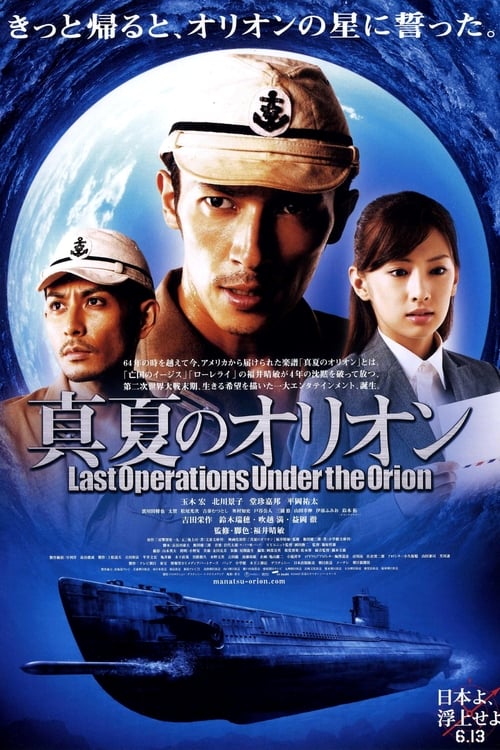
Battle Under Orion
Plot
The story of a Japanese sub's last mission during WWII.
Get the Weekly Woke Watchlist
New and trending movies scored for woke bias, preachy messaging, and forced political themes — before you waste your evening.
No spam. One useful email per week.
Overall Series Review
Categorical Breakdown
The narrative is driven by a historical conflict between Japanese and American forces, where the focus is on military duty and merit in a high-stakes duel between two captains. Characters are defined by their historically authentic national roles, not by an intersectional hierarchy. The Japanese casting is culturally and historically authentic to the setting, avoiding forced insertion of diversity or 'race-swapping'.
The film acts as a sympathetic wartime movie that portrays the Imperial Japanese Navy crew with respect, focusing on their courage, sacrifice, and legacy. The plot, which details the crew’s final mission, honors the sacrifices of ancestors and frames the core Japanese national institutions and military duty with gravity and sentiment. External cultures (the Americans) are depicted as a worthy adversary in a military duel, not a morally or spiritually superior group.
The main female characters are the Captain's wartime lover and his granddaughter, who link the past and present through a personal legacy, which is a complementarian role as the preservers of family and memory. The core action focuses on the masculine domain of a submarine battle, highlighting the men's competence and protective nature as they face a life-or-death decision. There is no evidence of a 'Girl Boss' military figure, emasculation of the male heroes, or anti-natalist messaging, as the story hinges on the concept of family legacy.
The narrative does not center on alternative sexualities or deconstruct the nuclear family. The film's romantic element is strictly a traditional male-female pairing, which is central to the intergenerational plot link (Captain, lover, granddaughter). The themes focus on traditional honor, duty, and sacrifice in a wartime setting, leaving no space for sexual or gender ideology lecturing.
The film, a Japanese war drama focused on honor and duty in a desperate situation, does not display hostility toward traditional religion, especially Christianity. The morality is driven by transcendent concepts of duty, sacrifice, and the objective truth of a life-or-death battle scenario. The focus is on courage and legacy, which provides a spiritual anchor rather than a vacuum of moral relativism.
Get the Weekly Woke Watchlist
New and trending movies scored for woke bias, preachy messaging, and forced political themes — before you waste your evening.
No spam. One useful email per week.