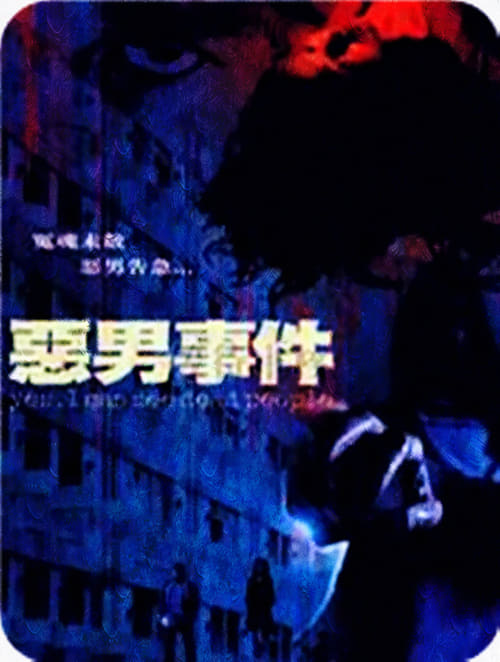
Yes, I Can See Dead People
Plot
Nam is not your typical teenager. Sure, he spends a little too much time on his computer, and tries a little too hard to meet the gorgeous stewardess who lives in his building. But recently three of Nam's friends have committed suicide, which isn't all bad since, as the title implies, he sees ghosts. However, these suicides only foreshadow weirder things to come. Soon his brother Tung, along with Chee, his stewardess crush, begin to act strangely, while his visions of ghostly children and other phantoms grow more frequent. With aid from his brother's girlfriend Charlie, Nam sets out to investigate his haunted building's past and help these malevolent spirits cross over.
Get the Weekly Woke Watchlist
New and trending movies scored for woke bias, preachy messaging, and forced political themes — before you waste your evening.
No spam. One useful email per week.
Overall Series Review
Categorical Breakdown
The movie is a Hong Kong production with an entirely East Asian cast, and the conflict is purely supernatural and personal. Characters are judged by their competence and willingness to accept their spiritual duties, adhering to a universal meritocracy of the soul. Race is not a factor in the narrative or character's moral standing.
The plot is steeped in traditional, local Hong Kong/Chinese ghost lore, where Nam's gift is an ancestral inheritance, and a mentor explicitly instructs him on the family's generational responsibility to use the power correctly. The story centers on resolving a problem in the immediate community (the haunted building's past), showing respect for the local spiritual heritage and familial lineage.
The male protagonist, Nam, is initially a slacker, and his brother Tung is a victim of possession, portraying the men as fallible or incompetent. However, the female characters, such as Charlie, the brother’s girlfriend, take on a competent and active role as Nam's partner in the supernatural investigation. The women serve important, active roles, but the narrative focuses on a quest to save the nuclear family unit and community, and there is no overt anti-natalist or 'Girl Boss' messaging.
The narrative centers on heteronormative relationships, specifically Nam's attempts to connect with his crush, Chee, and the relationship between his brother Tung and Charlie. The core conflict is the preservation of the traditional family unit against a spiritual threat. Sexual or gender identity outside of this traditional pairing is not a feature of the plot or thematic commentary.
The movie is predicated on a transcendent spiritual reality, where ghosts, a spiritual gift, and a moral obligation to help the dead exist. The entire plot is about solving a supernatural problem by adhering to a higher moral law—helping malevolent spirits 'cross over.' This directly acknowledges objective spiritual truth and duty rather than moral relativism.
Get the Weekly Woke Watchlist
New and trending movies scored for woke bias, preachy messaging, and forced political themes — before you waste your evening.
No spam. One useful email per week.