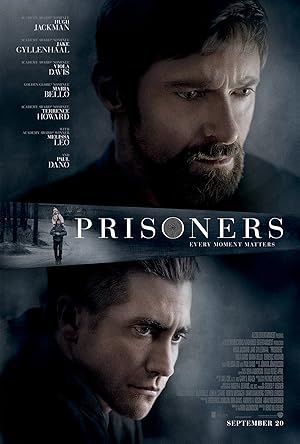
Prisoners
Plot
How far would you go to protect your family? Keller Dover is facing every parent's worst nightmare. His six-year-old daughter, Anna, is missing, together with her young friend, Joy, and as minutes turn to hours, panic sets in. The only lead is a dilapidated RV that had earlier been parked on their street. Heading the investigation, Detective Loki arrests its driver, Alex Jones, but a lack of evidence forces his release. As the police pursue multiple leads and pressure mounts, knowing his child's life is at stake the frantic Dover decides he has no choice but to take matters into his own hands. But just how far will this desperate father go to protect his family?
Get the Weekly Woke Watchlist
New and trending movies scored for woke bias, preachy messaging, and forced political themes — before you waste your evening.
No spam. One useful email per week.
Overall Series Review
Categorical Breakdown
The plot centers on a crime and the psychological toll on two families and a detective. Character motivations are entirely rooted in personal crisis and professional obligation, not in racial or intersectional identity. Characters are judged solely by their moral actions and choices under duress. Casting is colorblind without political commentary.
The film focuses on the defense of the American nuclear family and community. The tragedy is the failure to maintain the safety of the traditional suburban home and the ensuing moral chaos. The lead character, Keller Dover, is explicitly presented as a patriotic, self-reliant archetype (a survivalist and prepper) whose struggle is internalized, not a condemnation of his heritage or culture.
The core of the plot is the protective drive of the fathers and the detective to restore the children to the mothers. The main emotional dynamic revolves around the male response to a crisis in the family unit. Motherhood is central as the motivation for the search; the primary female villain is defined by her anti-natalist 'war against God' ideology, which the film clearly frames as evil and insane.
The narrative makes no mention of sexual ideology or alternative sexualities. The focus is entirely on the traditional nuclear family structure under attack by an external threat. Gender theory is completely absent from the film's themes and dialogue.
The film is heavily steeped in Christian symbolism and allegory, which is both its central subject and a source of moral ambiguity. It depicts an unfaithful priest as a murderer and the religious protagonist (Keller) descends into sin (torture and kidnapping) when he loses faith, suggesting religion does not guarantee morality. However, the ultimate villain's motivation is explicitly 'waging a war against God' by attacking children, framing anti-theism itself as the root of pure evil. The narrative presents moral law as objective, demonstrating the horrific consequence of Keller's abandonment of it.
Get the Weekly Woke Watchlist
New and trending movies scored for woke bias, preachy messaging, and forced political themes — before you waste your evening.
No spam. One useful email per week.