Secret Magic Control Agency
Plot
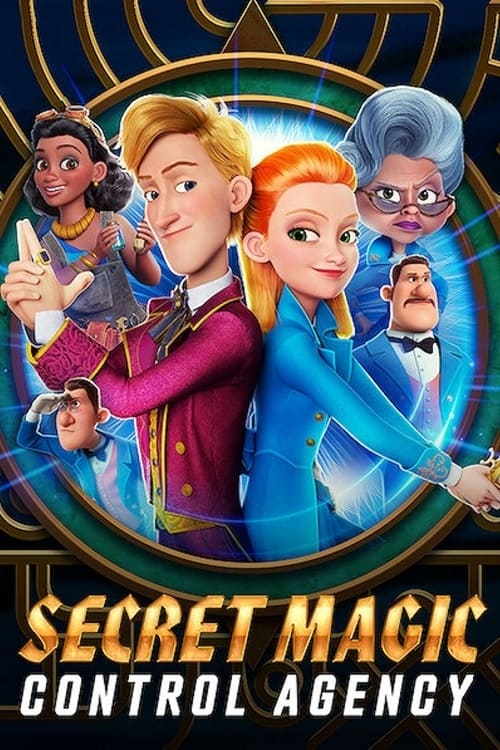
The Secret Magic Control Agency sends its two best agents, Hansel and Gretel, to fight against the witch of the Gingerbread House.
Get the Weekly Woke Watchlist
New and trending movies scored for woke bias, preachy messaging, and forced political themes — before you waste your evening.
No spam. One useful email per week.
Overall Series Review
Categorical Breakdown
The narrative makes no attempt to focus on race, class, or immutable characteristics, centering entirely on the sibling relationship and character merit. Both protagonists, Hansel and Gretel, and the secondary characters appear colorblind in a traditional fairy tale setting. The conflict is based on a moral split between professional discipline and con artist deception, not systemic oppression or privilege.
The plot's primary goal is to save the kingdom and its king from a usurper who uses dark magic, which frames the core institutions of the magical land as good and worth protecting. Themes of 'family cohesion' and ‘teamwork’ are explicitly promoted, which serves as a defense against chaos. There is no element that frames the Western-style fairy tale culture as fundamentally corrupt or racist.
Gretel is established as the highly-skilled, top agent, while her brother Hansel is initially presented as the moral failure and less competent con artist. This creates a 'Girl Boss' dynamic where the female lead is presented as instantly superior and more virtuous. However, the plot ultimately validates Hansel's unique, non-agency skills as essential to the mission's success, moving the dynamic toward a recognition of complementary strengths rather than outright male emasculation. The focus is on a professional mission and sibling bond, not motherhood.
The movie adheres to a normative structure, centering on a male-female sibling relationship and the traditional institution of a King and potential Queen. The story focuses exclusively on non-sexual family dynamics and a crime-fighting mission. There is no presence of alternative sexual or gender ideology, and the nuclear family structure is neither deconstructed nor criticized.
The story explicitly frames dark magic as evil, providing a clear moral demarcation between good and bad magic, and by extension, good and evil. The ending reinforces transcendent values like forgiveness, honesty, and family bonds as the source of strength and success. There is no hostility toward religion or any promotion of moral relativism.
Get the Weekly Woke Watchlist
New and trending movies scored for woke bias, preachy messaging, and forced political themes — before you waste your evening.
No spam. One useful email per week.