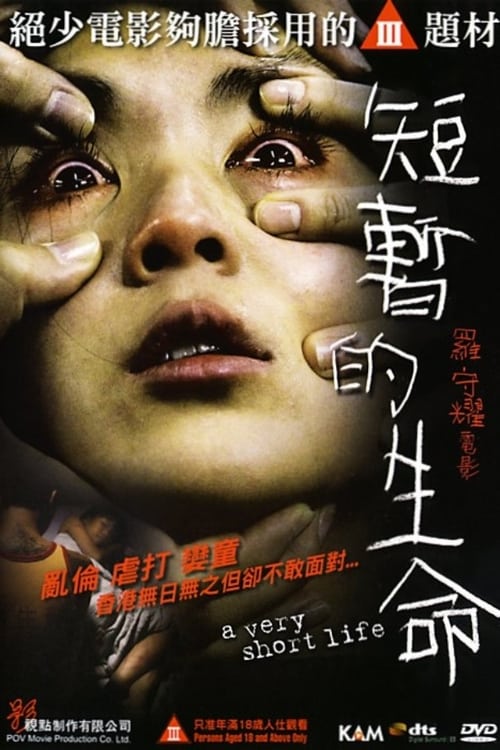
A Very Short Life
Plot
"A woman is born to give her body to men; her father or strangers should make no difference." Respectable Police Commissioner Josephine reinvestigates an insignificant murder case of a 11 years old girl. The murderer is the mother of the victim, Becky. Under intense interrogation, Becky refused to admit that she knew all along that her boyfriend was raping her little daughter at home. The harsh interrogation drives Becky into killing herself. What is the truth that the raging Commissioner is trying to find out? What is the seemingly defenseless mother hiding? Or is she acually telling the truth? Is the phrase, "A woman is born to give her body to men." the whole truth?
Get the Weekly Woke Watchlist
New and trending movies scored for woke bias, preachy messaging, and forced political themes — before you waste your evening.
No spam. One useful email per week.
Overall Series Review
Categorical Breakdown
The plot's central conflict and theme is the generational trauma and murder resulting from a deep-seated, systemic oppression of women based on their immutable characteristic (gender). The story exists to expose this hierarchy and the systemic failure to protect women and girls within a patriarchal mindset, aligning closely with the 'lecturing on systemic oppression' aspect of a high score.
The film is a Hong Kong production and is a critique of a destructive cultural belief (female subjugation) internal to that society. The narrative does not contain any hostility toward Western civilization, Western home culture, or Western ancestors, making the category definition for a high score irrelevant to the film's content.
The police investigation is led entirely by highly competent, professional female authority figures (Commissioner Josephine Wong and her team), which clearly demonstrates the 'Girl Boss' trope. The plot attributes the crime and subsequent tragedy to a historical and ongoing societal belief that positions women as 'born to give her body to men,' depicting the men in the victim's life as scumbags and abusers. This establishes a narrative that frames masculinity as overwhelmingly toxic and celebrates women in roles of uncompromising authority and non-domestic fulfillment.
The narrative's focus is on the crime of child abuse and murder within the context of a dysfunctional heterosexual family unit. The film contains no themes related to alternative sexualities, gender ideology, or deconstruction of the nuclear family beyond the tragedy caused by the crime itself. The normative structure of male-female pairing is standard, although depicted as toxic in this specific case.
The film is a morality tale that pursues justice for an objectively heinous crime (child abuse and murder), acknowledging a clear objective truth and moral law. There is no mention or critique of traditional religion, Christianity, or any embrace of moral relativism, as the police commissioner is committed to uncovering the truth and ensuring accountability.
Get the Weekly Woke Watchlist
New and trending movies scored for woke bias, preachy messaging, and forced political themes — before you waste your evening.
No spam. One useful email per week.