Teke Teke
Plot
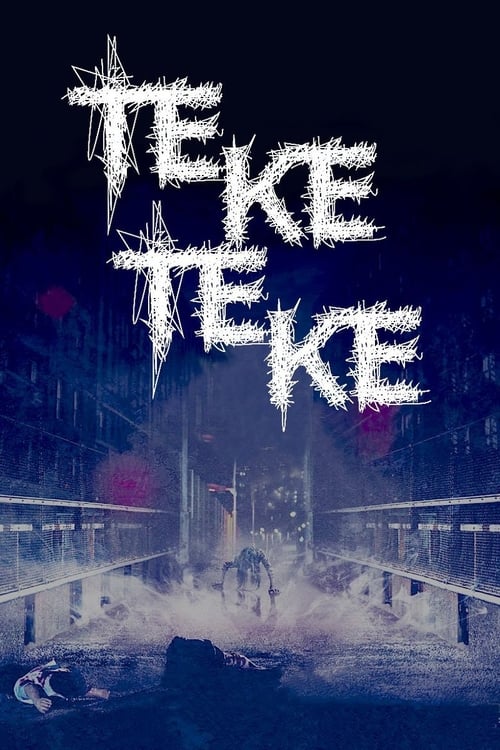
The upper torso of a female, claws her way around Japan searching for her lower half. The person's lower half was severed in a train accident in Hokkaido. Anyone that hears of this story will see Teke-Teke's upper half walking aimlessly around the countryside within three days.
Get the Weekly Woke Watchlist
New and trending movies scored for woke bias, preachy messaging, and forced political themes — before you waste your evening.
No spam. One useful email per week.
Overall Series Review
Categorical Breakdown
The film is a Japanese production based on a Japanese urban legend, featuring an entirely Japanese cast. The narrative focuses solely on supernatural horror and a ticking-clock curse, offering no commentary on race, intersectionality, or systemic oppression. Character issues are limited to generic high-school rivalries and fears, judged purely on their actions within the horror plot.
The film derives its entire premise from a popular Japanese urban legend, showing an interest in and engagement with domestic folklore and cultural ghost stories. Institutions and culture are utilized as the backdrop for horror, not demonized. There is no message that the home culture or its ancestors are fundamentally corrupt or deserving of destruction; the conflict is an ancient, localized supernatural curse.
The main protagonists are female high school students, Kana and her cousin Rie, who take charge of investigating the curse. The vengeful antagonist ghost, Teke Teke, is also female and is a figure of unbridled, visceral power. The film's plot device of female leads solving the mystery gives them agency, but the female characters are generally described as 'clichéd' and their struggles lack emotional weight, not portraying the self-contained perfection of a 'Girl Boss' archetype. The focus is on survival within the horror genre, not a message against motherhood or the celebration of careerism.
The narrative makes no mention of sexual or gender ideology. The focus is on a traditional horror curse and supernatural vengeance. The film maintains a normative structure where sexual identity is not a relevant plot point, nor is there any deconstruction of the nuclear family. The primary relationships are familial (cousins) or friendly.
The core of the plot involves a supernatural element—a vengeful spirit that requires a ritual or act of appeasement to be stopped. This premise inherently acknowledges a spiritual reality beyond the material world. The movie deals with folkloric spiritual truth and moral consequence (vengeance), placing it outside of a purely materialist or anti-theistic moral relativism.
Get the Weekly Woke Watchlist
New and trending movies scored for woke bias, preachy messaging, and forced political themes — before you waste your evening.
No spam. One useful email per week.