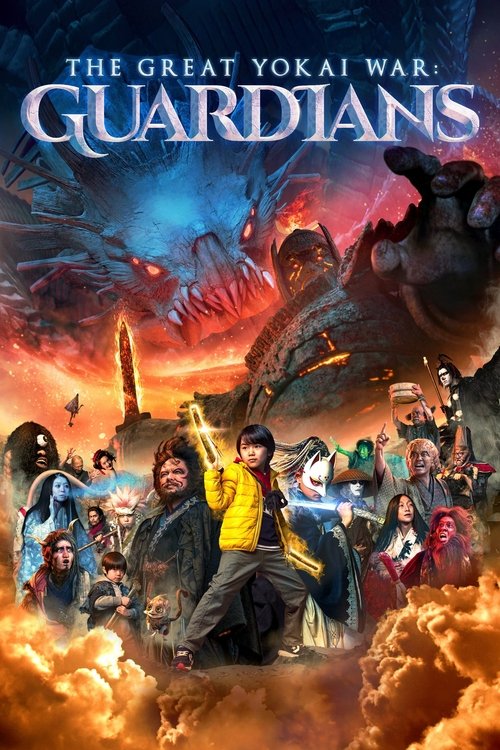
The Great Yokai War: Guardians
Plot
Fifth grader Kei Watanabe has inherited the hunter's blood to hunt yōkai. To save the world from destruction, Kei challenges a war against the yōkai.
Get the Weekly Woke Watchlist
New and trending movies scored for woke bias, preachy messaging, and forced political themes — before you waste your evening.
No spam. One useful email per week.
Overall Series Review
Categorical Breakdown
The movie is a Japanese film with a Japanese cast that focuses on a Japanese boy inheriting the bloodline of a legendary monster hunter to save Japan. The plot is driven by a specific cultural and familial identity, with the hero earning his status through courage and personal merit. There is no presence of anti-white sentiment, forced diversity, or race-swapping; the casting is culturally authentic and honors the source material.
The central conflict is the protagonist's quest, aided by guardian spirits (Yokai), to prevent the destruction of Tokyo and the nation of Japan. The film is a clear celebration of Japanese folklore and mythology, emphasizing the importance of preserving tradition, brotherly bonds, and the spiritual heritage of the country. Institutions like family and nation are viewed as worthy of protection.
The protagonist is a flawed, reluctant male who must overcome his anxiety and grief to become the hero, which runs contrary to the 'perfect instantly' trope. The core emotional drive is the male's protective instinct toward his younger brother. Female characters, such as the Fox-Faced Woman and his mother, are presented as strong, wise, and essential allies and protectors. The gender dynamics are complementary; the narrative does not feature emasculation of males or anti-natalist/anti-family messaging.
The narrative focuses on a traditional family structure—a boy, his younger brother, and his mother—following the death of the father, and the protagonist's coming-of-age. The plot does not contain any themes related to centering sexual ideology, alternative sexualities, or the deconstruction of the nuclear family. Gender identity is not a featured topic.
The film is steeped in Japanese animism and Shinto/Buddhist-inspired folklore, with the spiritual world of the Yokai and the quest to awaken a God of War being central to the plot. Faith and transcendent morality (good vs. evil corruption) are the very foundation of the story, serving as a source of power and resolution. There is no critique or vilification of religion; instead, it is a source of cultural strength.
Get the Weekly Woke Watchlist
New and trending movies scored for woke bias, preachy messaging, and forced political themes — before you waste your evening.
No spam. One useful email per week.