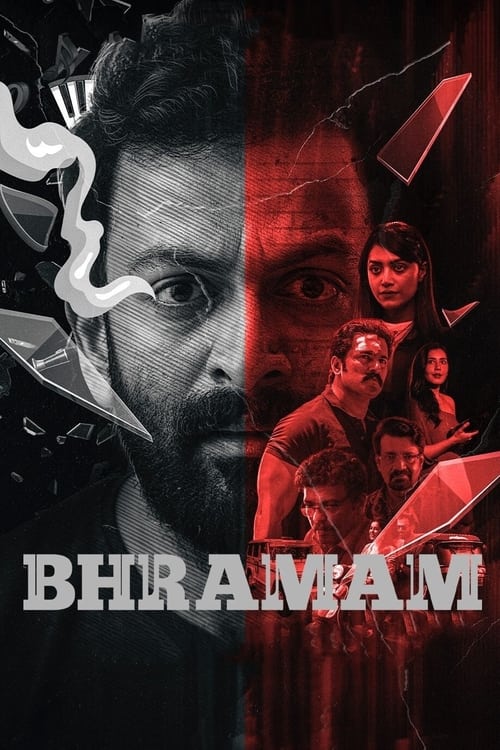
Bhramam
Plot
A pianist pretends to be blind for inspiration, witnesses a murder. He suddenly finds himself in a blind spot with the victim's wife, the murderer. During this ordeal, he loses his eyesight for real. Will his girlfriend believe him?
Get the Weekly Woke Watchlist
New and trending movies scored for woke bias, preachy messaging, and forced political themes — before you waste your evening.
No spam. One useful email per week.
Overall Series Review
Categorical Breakdown
The movie is set in India and its characters are Indian, making racial or 'whiteness' politics irrelevant. The conflict is based entirely on individual moral corruption, crime, and survival, not on any systemic oppression or intersectional hierarchy. Character merit or lack thereof, demonstrated by actions like murder and fraud, dictates the plot.
The film's criticism is directed at the universal vices of individual characters, such as greed, adultery, and murder, which take place within a local Indian setting. The narrative does not portray the home culture or its institutions as fundamentally corrupt or racist, nor does it elevate external cultures as morally superior.
The main female character, Simi, is the primary antagonist—a powerful, vicious, and calculating murderer who is arguably the most effective villain in the story. Her portrayal as a *femme fatale* uses her strength for evil, which is a departure from the 'perfect' feminist 'Girl Boss' trope. Another female character, Anna, is portrayed as innocent and supportive. The plot is driven by gender dynamics, but it avoids the explicit anti-natalist or male-emasculating lecturing associated with a high woke score.
The story does not center on alternative sexualities, gender theory, or the deconstruction of the nuclear family. The core relationships are a traditional adultery/murder triangle involving male and female characters. Sexuality remains private, and the structure is overwhelmingly normative.
The protagonist, a pianist, performs for community institutions like churches, suggesting a neutral or natural inclusion of religion in the setting without hostility. The moral vacuum and subjective morality are functions of the black comedy/noir genre, centering on greed and crime, rather than explicit anti-theistic political commentary or the vilification of religious characters.
Get the Weekly Woke Watchlist
New and trending movies scored for woke bias, preachy messaging, and forced political themes — before you waste your evening.
No spam. One useful email per week.