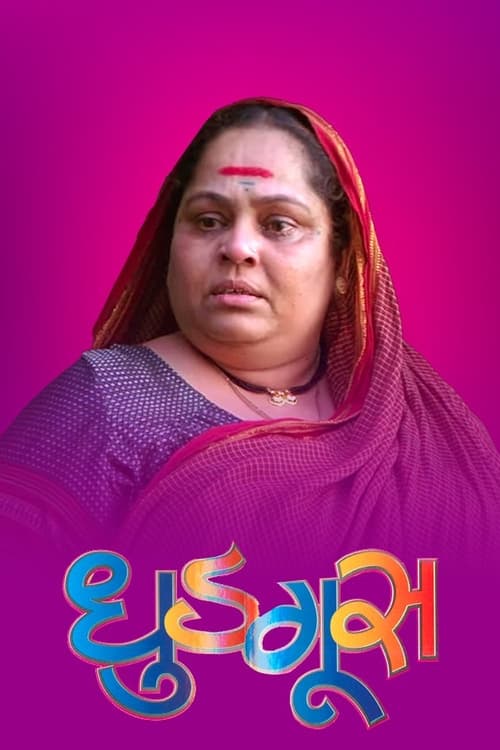
Dhudgus
Plot
An army officer from a small village passes away after he marries a girl. The whole village, including both her families, decide to disown her owing to her being unlucky.
Get the Weekly Woke Watchlist
New and trending movies scored for woke bias, preachy messaging, and forced political themes — before you waste your evening.
No spam. One useful email per week.
Overall Series Review
Categorical Breakdown
The narrative does not engage with the Western concept of intersectionality or vilification of 'whiteness' as the film is a local Indian production focused on a rural Maharashtrian village. Characters are defined by the universal vice of greed, which overrides any other characteristic. The initial discrimination against the widow is based on a superstition about her being 'ill-luck,' a traditional cultural failing, not a political lecture on immutable characteristics or systemic oppression in the modern political sense.
The film’s critique is aimed at the 'death of morality' and 'ugly side of human behavior' within the immediate community: the village's corruption and the family's greed. This is a targeted self-critique of a specific local societal failing, not a broad-stroke condemnation of the entire home civilization or ancestors. Core concepts like the soldier's sacrifice, though quickly overshadowed, are not fundamentally demonized; rather, the subsequent human hypocrisy is exposed.
The main conflict exposes the profound misogyny of the community, where a woman is declared 'ill-luck' and abandoned after her husband's death. This highlights traditional anti-female prejudice, but the protagonist is not portrayed as an instantaneous 'Girl Boss' or 'Mary Sue.' She is an isolated victim whose circumstances are exploited. The narrative critiques the traditional system, but it does so through a social drama lens, not by pushing the 'career is the only fulfillment' or anti-natalist messages.
The film focuses entirely on a traditional, if tragic, heterosexual marriage, widowhood, and the subsequent exploitation by the extended family and community. The story structure is strictly normative. There is no presence of alternative sexualities, deconstruction of the nuclear family unit beyond its dissolution by death, or any element of gender ideology or queer theory.
The core injustice is rooted in human greed and a specific cultural superstition ('ill-luck'). The film laments the 'death of morality' in society, which implies a desire for an objective, higher moral law, not a descent into moral relativism. Traditional religion is not framed as the root of evil; instead, the plot shows how corrupt individuals exploit a superstitious belief for financial gain.
Get the Weekly Woke Watchlist
New and trending movies scored for woke bias, preachy messaging, and forced political themes — before you waste your evening.
No spam. One useful email per week.