Landman
Season 2 Analysis
Season Overview
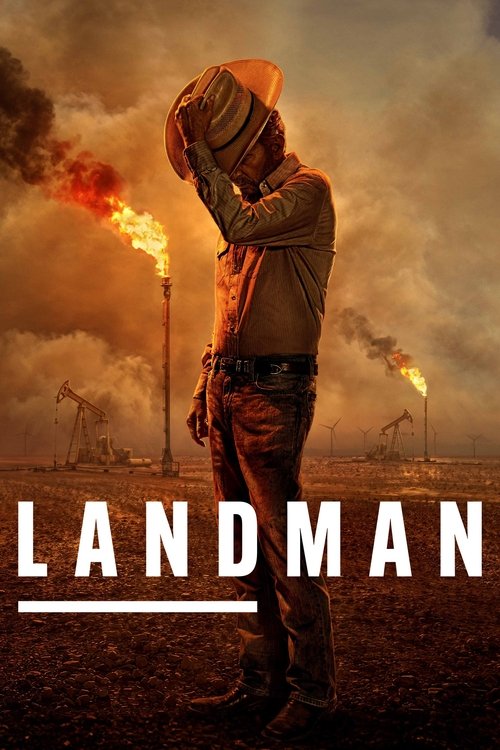
In season two, as oil rises from the earth, so do secrets - and Tommy Norris's breaking point may be closer than he realizes. Facing mounting pressure from M-Tex Oil, Cami Miller, and the shadow of his kin, survival in West Texas isn't noble - it's brutal. And sooner or later something's got to break.
Season Review
Categorical Breakdown
The narrative does not rely on intersectional hierarchy or vilify 'whiteness.' Instead, the show champions the traditional, often flawed, white male protagonist and his worldview. One subplot critiques the police and systemic justice when a young male character acts in self-defense, but this functions as a defense of common-sense morality rather than a systemic oppression lecture. The casting is colorblind or historically authentic to the region's demographics, with no forced insertion of diversity that supersedes merit.
The show is explicitly framed as a defense and celebration of West Texas, the oil patch, and its associated cultural values, with a 'Conservatively minded' thematic focus. It presents the traditional, roughneck way of life as authentic and under siege by outside pressures, directly embracing gratitude for home culture and its institutions rather than civilizational self-hatred.
The show presents a high-scoring 'Girl Boss' trope through a powerful female character who ascends to a corporate presidency and demonstrates ruthless business acumen and independence. The score is high due to the secondary arc where a male character's protective and provider instincts, after achieving financial success, are completely rejected by his partner in favor of her demand for 'total autonomy.' This plot point portrays masculinity as a fault and elevates career-centric self-fulfillment over family structure.
The show receives a very low score because it actively satirizes the 'Queer Theory Lens' through the introduction of Ainsley's non-binary, they/them roommate, Paigyn, who is intentionally written as an unlikable caricature. This character is presented as a 'lazy amalgam' of progressive tropes whose ideology is mocked by the traditional family and ultimately dismissed by the narrative. The presence of the character is a central plot point, but its thematic role is to be a satirical target, which is the inverse of promoting the ideology.
Religion is not a central focus of the main plot, and there is no dedicated storyline vilifying Christianity. The world is highly secular and pragmatic, focused on business and family, which implies a moral relativism based on survival rather than an explicit moral law. A minor cultural jab occurs with a character whose name is pronounced 'Pagan.' Overall, the show avoids a deep spiritual vacuum, instead relying on a secular code of loyalty and consequence.