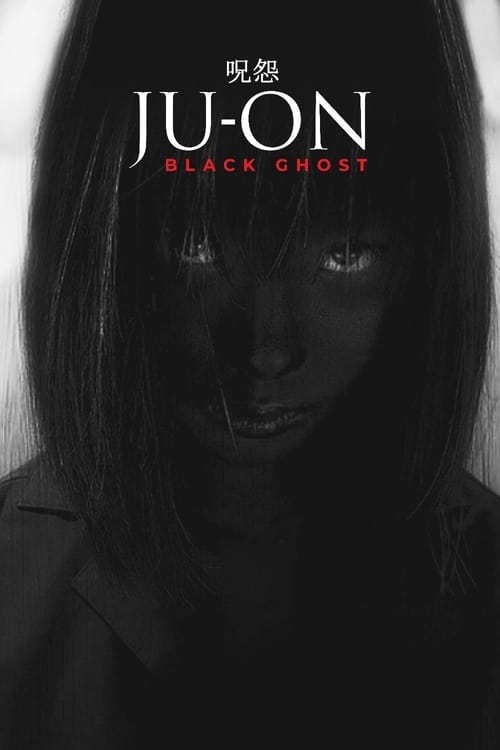
Ju-On: Black Ghost
Plot
The supernatural grudge manifests itself by way of a strange cyst growing in the body of a young woman, slowly draining all life from her in revenge for... what?
Get the Weekly Woke Watchlist
New and trending movies scored for woke bias, preachy messaging, and forced political themes — before you waste your evening.
No spam. One useful email per week.
Overall Series Review
Categorical Breakdown
The film features an entirely Japanese cast, is set in Japan, and draws on Japanese folklore of vengeful spirits; race and intersectional theory play no part in the plot or character motivations. Characters are defined purely by their relation to the supernatural curse and its victims.
The horror is a supernatural phenomenon specific to a familial tragedy and the mythology of the Ju-On curse, with no framing of Japanese society, culture, or ancestry as fundamentally corrupt or evil. Institutions like the family are victims of the curse, not its ideological cause.
The core plot is focused on a female body anomaly (the cystoma, an unborn twin) which becomes the source of the curse, emphasizing a uniquely female-related horror. A female spiritual specialist is portrayed as the only one with the power to confront the evil, making her a capable figure. However, the themes of motherhood and the female body are used for horror, not as a tool for anti-natalist commentary, keeping the score low.
The narrative centers on a supernatural haunting of a girl and her nuclear family unit. There is no presence of alternative sexualities, gender ideology, or deconstruction of the traditional male-female pairing or family structure.
The story explicitly features a character with spiritual power who is called upon to fight the supernatural curse, validating the existence of spiritual reality and unseen moral forces. The battle against the malevolent ghost acknowledges a transcendent moral conflict, not a world of moral relativism.
Get the Weekly Woke Watchlist
New and trending movies scored for woke bias, preachy messaging, and forced political themes — before you waste your evening.
No spam. One useful email per week.