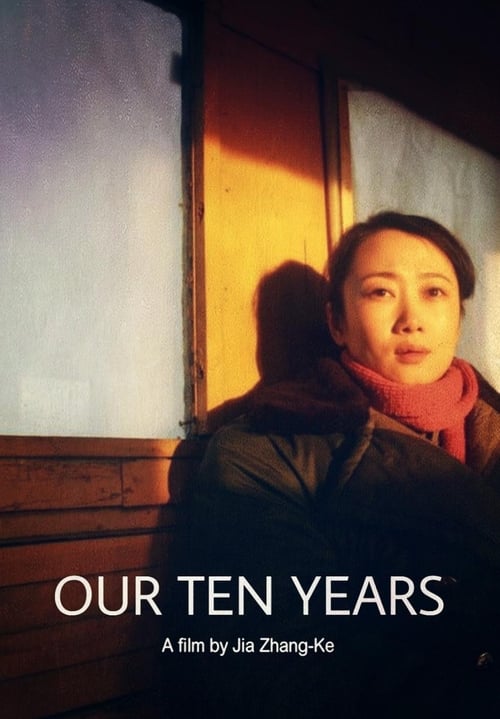
Our Ten Years
Plot
Throughout ten years of a key era in Chinese and Hong Kong history, a girl becomes fixated on a fellow commuter who she observes regularly. While the two never speak to one another, the girl captures her appearance and life changes during the years through various means such as photos and drawings.
Get the Weekly Woke Watchlist
New and trending movies scored for woke bias, preachy messaging, and forced political themes — before you waste your evening.
No spam. One useful email per week.
Overall Series Review
Categorical Breakdown
The narrative centers on an individual's personal, non-political act of observing and documenting another person's life over time. The setting in China/Hong Kong eliminates the rubric’s core focus on 'whiteness' and Western intersectional conflict. Characters are judged by the natural progression and challenges of their lives, not by racial or intersectional hierarchy.
The film is an observational short set against a backdrop of major social and historical change in Chinese and Hong Kong history. The focus on documentation and memory suggests a concern for preserving cultural details and a critique of the rapid, materialist modernization that erases the past. This represents a critique of the current direction of the home nation/civilization, but not an outright self-hatred directed at its ancient heritage or ancestors.
The core of the plot involves a female observer and a female subject, documenting the latter’s general life changes. The film is observational and deals with the quiet reality of time passing. There is no evidence of the 'Mary Sue' or 'Girl Boss' tropes, no emasculation of men, and no explicit messaging condemning family or motherhood for the sake of career fulfillment.
This brief, observational film about a commuter’s life over ten years maintains a normative structure. The plot does not focus on sexual ideology, an effort to center alternative sexualities, or a deconstruction of the nuclear family unit. Sexuality remains a private aspect of the characters' lives, which are primarily seen through the lens of aging and changing appearance.
The film is secular, focusing on personal memory and the socio-historical effects of economic change. As a non-Western film, it does not engage with the rubric’s specific critique of Christianity or traditional Western religion. There is no evidence of hostility toward faith or an explicit promotion of subjective 'power dynamics' over objective moral law.
Get the Weekly Woke Watchlist
New and trending movies scored for woke bias, preachy messaging, and forced political themes — before you waste your evening.
No spam. One useful email per week.