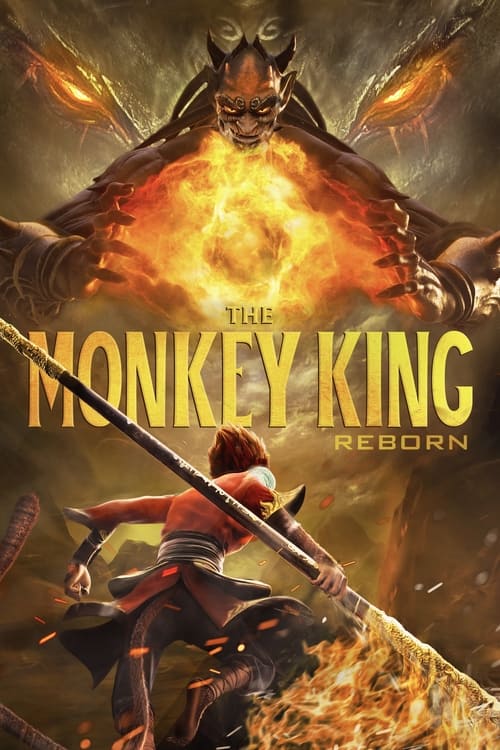
The Monkey King: Reborn
Plot
When the irritable monkey king visits a temple together with his master Tang Monk, he feels offended because of a trifle and thereupon accidentally destroys a magic tree growing on the sacred ground. This brings an ancient demon king back to life, who promptly kidnaps Tang Monk to take revenge for his long imprisonment. The monkey king and his followers have only three days to not only save their master but also to prevent the demon king from regaining his full powers and destroying the world…
Get the Weekly Woke Watchlist
New and trending movies scored for woke bias, preachy messaging, and forced political themes — before you waste your evening.
No spam. One useful email per week.
Overall Series Review
Categorical Breakdown
The main conflict is not based on intersectional hierarchy or Western race politics. The Monkey King character is burdened by his identity as a demon and 'stone-born,' experiencing a form of 'Fantastic Racism' from some condescending immortal/temple figures who look down on him and his demon companions. The narrative, however, resolves this by showing that his heroic actions and loyalty to his master define his character, not his immutable nature as a demon. The casting is historically authentic to the Chinese source material, without any elements of race-swapping or 'white' vilification.
The film is an embrace of Chinese civilizational heritage, drawing from one of its most famous and sacred foundational texts, *Journey to the West*. The world is richly rendered with Chinese folklore, deities, and philosophical concepts. The story is a straightforward hero's journey where the heroes must save the world from an ancient demonic threat. There is no deconstruction of or hostility toward the film's own cultural, ancestral, or spiritual background.
The core cast and heroes on the quest are the four main male figures from the classic novel: the human master and his three demon disciples. There is no 'Mary Sue' or 'Girl Boss' trope present in the central conflict. The story is focused on the male protagonist, Sun Wukong, learning to control his masculine flaw of wrath and becoming a more responsible protector for his master. There is no detectable anti-natalist or anti-family messaging.
The story adheres to a normative structure based on traditional archetypes from the source material. No elements of alternative sexualities, gender ideology, or deconstruction of the nuclear family are present in the plot or character dynamics. Sexuality is not a theme of the children's adventure narrative.
The story is deeply embedded in Eastern spiritual concepts, featuring immortals, demons, gods, and a Buddhist monk (Tang Sanzang) as the spiritual center and master. Tang Monk is portrayed as serene and wise, a source of moral strength and calm in the face of death. Faith and the spiritual pilgrimage are the context for the entire adventure. The moral struggle is against a primordial demon and the Monkey King’s own wrath, not against religion or transcendent morality.
Get the Weekly Woke Watchlist
New and trending movies scored for woke bias, preachy messaging, and forced political themes — before you waste your evening.
No spam. One useful email per week.