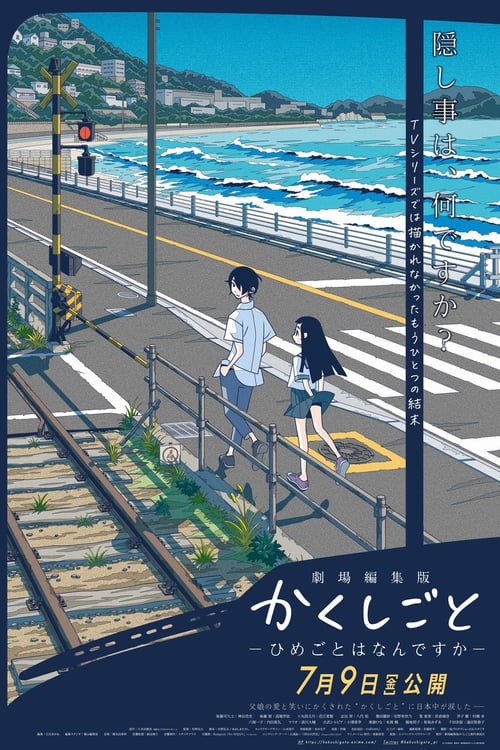
Kakushigoto Theatrical Edition
Plot
This special cut of the anime series recaps the events of the slice of life comedy where lewd manga artist Kakushi Goto tries to hide his profession from his adorable daughter, Hime. What ensues is a ton of hijinks and a lot of heart in this emotional adventure. The Kakushigoto Theatrical Edition isn’t just a recap; it also includes some all-new footage, which makes it the perfect watch for repeat viewers or those looking to experience it for the very first time.
Get the Weekly Woke Watchlist
New and trending movies scored for woke bias, preachy messaging, and forced political themes — before you waste your evening.
No spam. One useful email per week.
Overall Series Review
Categorical Breakdown
The narrative is entirely focused on personal and familial conflict, not on group identity or race. The characters' struggles are based on professional reputation, secrecy, and their bond as a family. Character merit, defined by Kakushi's protective love for his daughter, is the central moral measure. The cast is entirely Japanese and historically authentic to the story's setting in the Japanese manga industry.
The film centers on a loving, functional, albeit non-traditional, family unit. The story does not deconstruct or criticize Japanese culture, but uses the cultural backdrop of the manga industry to create the central conflict. The father's actions are driven by a traditional, protective desire to be a good role model for his child. The institution of the family is shown as a shield of love and stability.
The core dynamic celebrates the complementary roles of the parent and child. The father is the primary protective figure, driven by a masculine impulse to shield his daughter's innocence and provide for her through his work. Hime, while central, is primarily defined by her love for her father and her journey to understand her family's history, not by a 'Girl Boss' power fantasy. The mother's backstory is a source of drama and longing, which validates the importance of the nuclear family structure rather than dismissing motherhood as a prison.
The narrative adheres to a normative structure, focusing on the father-daughter relationship and the implied traditional male-female pairing of the absent mother and father. Sexual themes only appear as the content of the father's profession, which he actively tries to hide from his child to preserve her innocence. The story does not center alternative sexualities or contain any overt political lecturing on gender or sexual identity.
The movie is a slice-of-life comedy/drama and is completely secular in its focus. There is no explicit commentary, positive or negative, regarding organized religion, especially Christianity. The morality in the story is objective and transcendent, centered on the objective truth of parental love and sacrifice, but this is conveyed through emotional drama and comedy rather than religious principles or a higher moral law.
Get the Weekly Woke Watchlist
New and trending movies scored for woke bias, preachy messaging, and forced political themes — before you waste your evening.
No spam. One useful email per week.