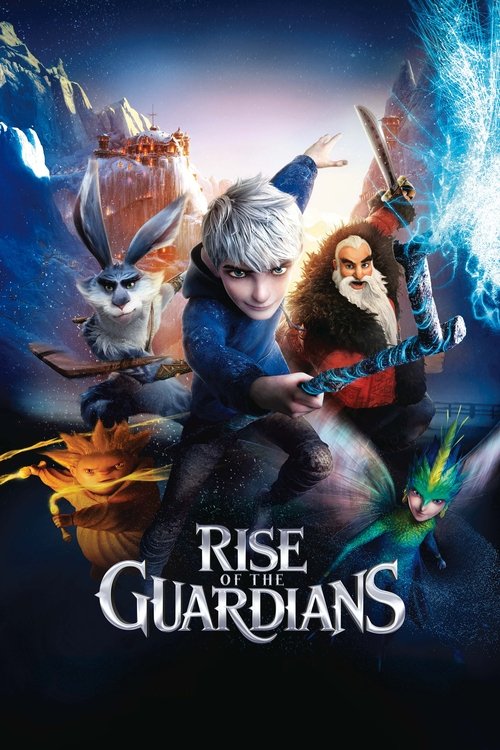
Rise of the Guardians
Plot
When an evil spirit known as Pitch lays down the gauntlet to take over the world, the immortal Guardians must join forces for the first time to protect the hopes, beliefs and imagination of children all over the world.
Get the Weekly Woke Watchlist
New and trending movies scored for woke bias, preachy messaging, and forced political themes — before you waste your evening.
No spam. One useful email per week.
Overall Series Review
Categorical Breakdown
The film does not rely on race or immutable characteristics for its narrative. Character power and standing are based on their connection to a universal value (Fun, Wonder, Hope, Dreams, Memories), representing a universal meritocracy. The Guardians are a globalized mix of mythological figures, but their composition is organic to the source mythology, not a forced insertion of intersectional diversity. The villain is a personification of fear, not a stand-in for 'whiteness' or any political concept.
The plot's entire purpose is to defend and protect core, positive cultural institutions and ancestors—the traditional figures of Western and global childhood myths like Santa Claus and the Easter Bunny. This mission is framed as shielding the innocence of children against an external, chaotic force of darkness (Pitch Black). The narrative demonstrates a clear respect and defense of these cultural foundations.
The team includes a male majority: four male Guardians (Santa Claus, Jack Frost, Easter Bunny, Sandman) and one female Guardian, the Tooth Fairy. The Tooth Fairy is a competent and powerful leader of her own domain, but her role is complementary to the others. She is not portrayed as an all-perfect 'Mary Sue' nor are the male Guardians depicted as bumbling idiots. There is no messaging that vilifies motherhood or the nuclear family; Jack Frost's heroic origin is an act of self-sacrifice to save his younger sister.
The movie contains no centering of alternative sexualities, deconstruction of the nuclear family, or messaging related to gender ideology. The focus is exclusively on the adventure, mythology, and the universal experience of childhood innocence and belief, operating within a normative, non-sexualized structure for a children's film.
The movie is secular, not religious, but it promotes a message of objective, transcendent morality: the battle between the objective good of 'belief' (hope, wonder, dreams) and the objective evil of 'fear' (Pitch Black). The ultimate source of the Guardians' power is a higher entity (The Man in the Moon) and the collective faith of children, which serves as an equivalent to an objective higher moral law and spiritual strength. It celebrates faith as a source of power without attacking traditional religion.
Get the Weekly Woke Watchlist
New and trending movies scored for woke bias, preachy messaging, and forced political themes — before you waste your evening.
No spam. One useful email per week.