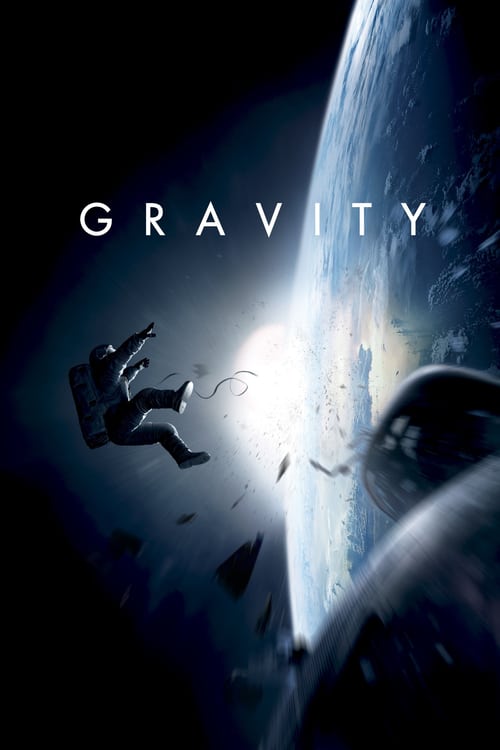
Gravity
Plot
Dr. Ryan Stone, a brilliant medical engineer, is on her first Shuttle mission, with veteran astronaut Matt Kowalski in command of his last flight before retiring. But on a seemingly routine spacewalk, disaster strikes. The Shuttle is destroyed, leaving Stone and Kowalski completely alone-tethered to nothing but each other and spiraling out into the blackness of space. The deafening silence tells them they have lost any link to Earth and any chance for rescue. As fear turns to panic, every gulp of air eats away at what little oxygen is left. But the only way home may be to go further out into the terrifying expanse of space.
Get the Weekly Woke Watchlist
New and trending movies scored for woke bias, preachy messaging, and forced political themes — before you waste your evening.
No spam. One useful email per week.
Overall Series Review
Categorical Breakdown
The film’s central conflict is a universal human vs. nature survival story in space, completely devoid of race or identity-based power structures. Characters are defined by their professional skills, experience, and psychological resilience in the face of disaster. Casting appears colorblind and meritocratic within the context of the astronaut corps. No vilification of ‘whiteness’ or forced insertion of diversity occurs.
The entire narrative is a desperate, life-or-death struggle for the protagonist to return to Earth, which is constantly framed as the source of life, safety, and connection. The film does not present any hostility toward Western civilization, one's home, or ancestors. The external threat is an indiscriminate cloud of debris, not a 'Noble Savage' or a critique of human heritage. The ending celebrates the main character’s final connection to the ground and her commitment to living.
Dr. Ryan Stone is the sole protagonist who fights for and ultimately secures her own survival, which aligns with the 'Girl Boss' trope of female self-sufficiency in action. The male character, Kowalski, plays the role of a mentor who sacrifices himself so that she may live, which removes him as the primary hero and places the woman at the center of the action. However, the protagonist is not instantly perfect; she is an emotionally vulnerable character struggling with grief over her lost daughter, a clear reference to motherhood and family, which complicates an 'Anti-Natalism' message. Her arc is about earning her survival through competence and emotional will, not an instant ‘Mary Sue’ status.
The movie does not contain any themes, characters, or dialogue pertaining to alternative sexualities, queer theory, or gender ideology. The character's personal struggle is focused on her grief for her daughter, an element of the traditional nuclear family. Sexuality is entirely private and not a factor in the story's development.
The main character, Dr. Stone, mentions in a moment of existential crisis that she has never prayed and that no one will pray for her soul, signifying a lack of formal religious connection. The film’s resolution emphasizes a secular, self-determined spiritual rebirth and the triumph of the human will to live, rather than relying on an external, divine intervention. This focus on self-rescue and a 'spiritual but not religious' outlook leans away from transcendent morality, but it stops short of outright hostility or depiction of religious characters as villains.
Get the Weekly Woke Watchlist
New and trending movies scored for woke bias, preachy messaging, and forced political themes — before you waste your evening.
No spam. One useful email per week.