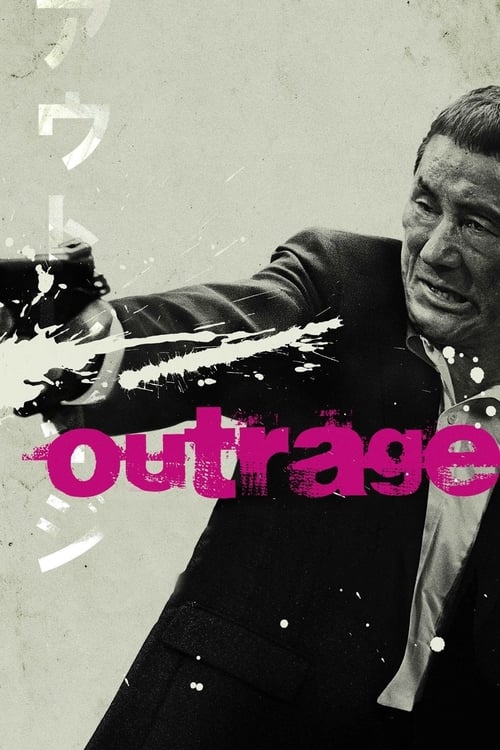
Outrage
Plot
When a tough yakuza gangster is betrayed by his bosses, it means all out war. Bodies pile up as he takes out everyone in his way to the top in a brutal quest for revenge.
Get the Weekly Woke Watchlist
New and trending movies scored for woke bias, preachy messaging, and forced political themes — before you waste your evening.
No spam. One useful email per week.
Overall Series Review
Categorical Breakdown
Characters are judged strictly by their position in the criminal hierarchy and their strategic usefulness, demonstrating a brutal meritocracy within the yakuza structure. The narrative features an all-Japanese cast authentic to the setting, with all conflicts focused on internal power dynamics among the clans and corrupt local police. Race and immutable characteristics are not a factor in the core conflict.
The film is a severe and cynical critique of the Japanese yakuza subculture and corrupt Japanese police, with a promotional theme of all the characters being evil. The critique is directed inward at Japanese crime and institutional corruption, not at Western civilization, home culture, or ancestors. The focus is on the failure of honor within a criminal world, not a civilizational self-hatred of the West.
The movie is overwhelmingly male-centric, focusing only on the male gangsters and their power plays. There are no major female characters, and the narrative does not feature any 'Girl Boss' tropes. Women are entirely peripheral to the plot, and the film does not engage with themes of motherhood, career fulfillment, or emasculation of males.
The narrative is a straightforward, violent, and hyper-masculine crime thriller. The plot is focused exclusively on the acquisition of power, betrayal, and vengeance within an all-male criminal hierarchy. Alternative sexualities, gender theory, or the deconstruction of the nuclear family are completely absent from the storyline.
The film depicts a world of total moral corruption, betrayal, and nihlistic violence where power and money are the only operative 'morality.' This aligns with moral relativism as a spiritual vacuum. However, there is no explicit hostility toward religion, especially Christianity, or traditional religious figures in the narrative; religion is simply irrelevant to the criminal world depicted.
Get the Weekly Woke Watchlist
New and trending movies scored for woke bias, preachy messaging, and forced political themes — before you waste your evening.
No spam. One useful email per week.