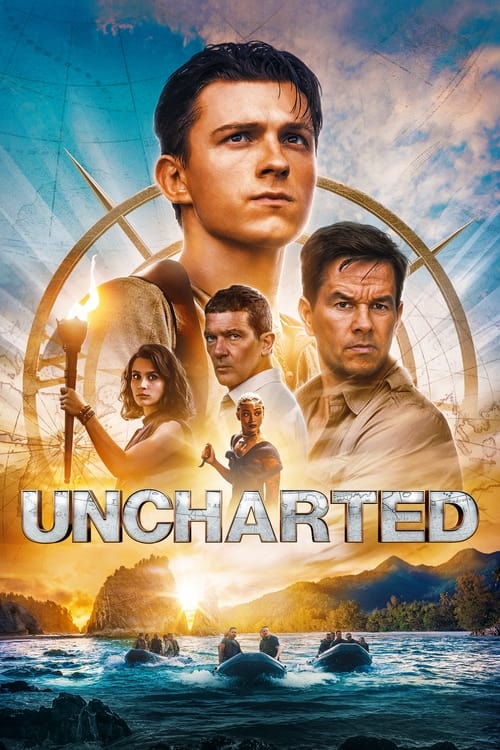
Uncharted
Plot
A young street-smart, Nathan Drake and his wisecracking partner Victor “Sully” Sullivan embark on a dangerous pursuit of “the greatest treasure never found” while also tracking clues that may lead to Nathan’s long-lost brother.
Get the Weekly Woke Watchlist
New and trending movies scored for woke bias, preachy messaging, and forced political themes — before you waste your evening.
No spam. One useful email per week.
Overall Series Review
Categorical Breakdown
The lead protagonist is a white male, but the two primary female characters, Chloe Frazer and Jo Braddock, are played by actresses of color, which is a change in depiction for one character from the game. The narrative does not center on race or intersectional hierarchy; the characters are defined solely by their skills as thieves, con artists, and fighters. There are no lectures on privilege or systemic oppression, with all main characters—regardless of background—being morally ambiguous criminals in pursuit of money.
The central conflict involves hunting a treasure from a Western colonial-era expedition (Magellan's crew), with the main antagonist being a wealthy Spanish heir who believes the treasure belongs to his family. The film is a traditional, globe-trotting adventure focused on personal gain. There is no narrative lecturing that frames Western culture or its ancestors as fundamentally corrupt, although it places a wealthy heir of Western heritage in the role of a villain driven by greed and entitlement.
The two primary female characters are portrayed as formidable, lethal, and hyper-competent operatives, with the black female antagonist being a ruthless mercenary who commits casual murder and is highly capable in combat. The main male lead remains competent and the central hero, and is not portrayed as a 'bumbling idiot.' The focus is entirely on adventure and career, with no anti-natalism messaging, as there is no focus on family aside from Nathan's lost brother.
There is no presence of explicit alternative sexual ideology, gender theory, or centering of LGBTQ+ themes in the narrative. The plot focuses on the action and adventure with a minimal and implied heterosexual dynamic between the male and female leads, maintaining a normative structure.
The treasure hunt uses Catholic symbols, churches, and iconography, including a Barcelona basilica, as mere puzzle devices to be manipulated or desecrated by the treasure-hunting thieves. Characters mock the male protagonist's residual guilt from his Catholic orphanage upbringing. The film treats religious artifacts and locations as secular obstacles to wealth rather than sources of objective truth or spiritual strength, creating a spiritual vacuum without explicitly condemning religion.
Get the Weekly Woke Watchlist
New and trending movies scored for woke bias, preachy messaging, and forced political themes — before you waste your evening.
No spam. One useful email per week.