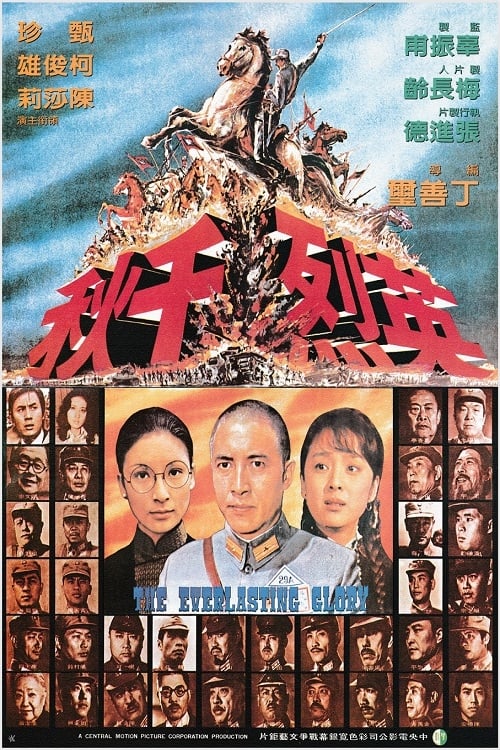
The Everlasting Glory
Plot
A most touching and consistently heart-gripping war drama depicts the heroic deeds of General Chang Tsu-chung who was even held in high esteem and dubbed as “Mars of China” by his Japanese counterpart, General Itagaki during Sino-Japanese war.
Get the Weekly Woke Watchlist
New and trending movies scored for woke bias, preachy messaging, and forced political themes — before you waste your evening.
No spam. One useful email per week.
Overall Series Review
Categorical Breakdown
The film centers on the merit and heroic character of General Chang Tsu-chung, a Nationalist Chinese military leader. The conflict is framed as a national defense against an imperialist invader. Characters are judged purely by their loyalty, courage, and combat effectiveness, aligning with universal meritocracy. The narrative has no connection to modern Western intersectional hierarchy, racial grievances, or the vilification of 'whiteness.'
The central theme is the selfless defense of the Chinese homeland against the Japanese invasion. The movie functions as a celebration of national spirit, courage, and the sacrificial duty of ancestors. This narrative is fundamentally an expression of gratitude and respect for one's nation and its institutions, directly opposing the definition of civilizational self-hatred.
The core of the plot focuses on a male military general and his heroic sacrifice in battle. While female characters appear in the cast (likely in roles such as wives or patriotic civilians), the narrative is dominated by masculine military valor and duty. It is a traditional war epic, featuring no 'Girl Boss' tropes, no emasculation of males, and no anti-natalist messaging. The gender dynamics are implicitly complementarian, with the men being the protectors of the nation and the home.
The 1974 Taiwanese historical war drama genre, focusing on military heroism and national conflict, contains no exploration of alternative sexualities, queer theory, or gender ideology. The focus remains strictly on the traditional, normative structure of a society under threat of war. Sexual ideology is absent from the public narrative and character motivation.
The film's heroic narrative of ultimate sacrifice against an objective evil (military invasion) is deeply rooted in a transcendent moral framework. General Chang Tsu-chung's dedication to his country and the defense of innocent people affirms an objective moral truth. There is no evidence of hostility toward religion, specifically Christianity, or an embrace of moral relativism in the plot.
Get the Weekly Woke Watchlist
New and trending movies scored for woke bias, preachy messaging, and forced political themes — before you waste your evening.
No spam. One useful email per week.