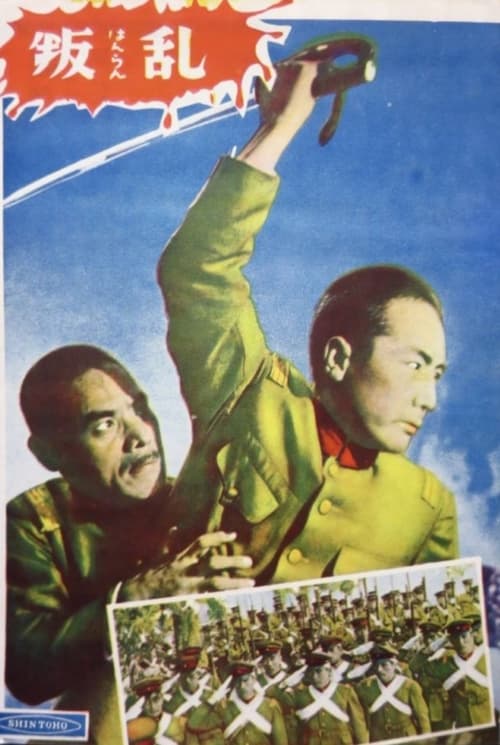
Hanran
Plot
Get the Weekly Woke Watchlist
New and trending movies scored for woke bias, preachy messaging, and forced political themes — before you waste your evening.
No spam. One useful email per week.
Overall Series Review
Categorical Breakdown
The entire cast is racially and historically authentic to the time and place of the 1936 Japanese military. The central conflict is purely ideological and factional, concerning different groups of Japanese military officers and politicians. Character merit and political conviction, however misguided, are the sole drivers of the plot; there is no reliance on immutable characteristics or intersectional hierarchy.
The movie centers on an ultranationalist rebellion where young officers commit treason because they believe the current government has betrayed the true spirit and system of the nation. Their actions are an attempt to restore their home culture and nation to what they believe is a purer form, which is the opposite of civilizational self-hatred.
The story is a military and political historical drama, focusing almost exclusively on the actions and relationships of male officers. Female characters, if present, are relegated to traditionally supportive roles like wives or mothers. The focus is on traditional masculine virtues like honor and duty; there are no 'Girl Boss' tropes or anti-natalist messages.
As a serious 1954 historical drama about a military coup, the film does not engage with modern sexual identity or gender ideology. The standard social structure of the time, centered on the traditional family unit, is the assumed normative background, and sexuality is not a topic of discussion or lecturing.
The conflict is secular and political, concerning military honor, perceived government corruption, and national politics. The moral framework is rooted in traditional concepts of loyalty and national duty rather than a critique of religion. There is no hostility toward faith or embrace of moral relativism; the characters operate under a strict, albeit politically motivated, moral code.
Get the Weekly Woke Watchlist
New and trending movies scored for woke bias, preachy messaging, and forced political themes — before you waste your evening.
No spam. One useful email per week.