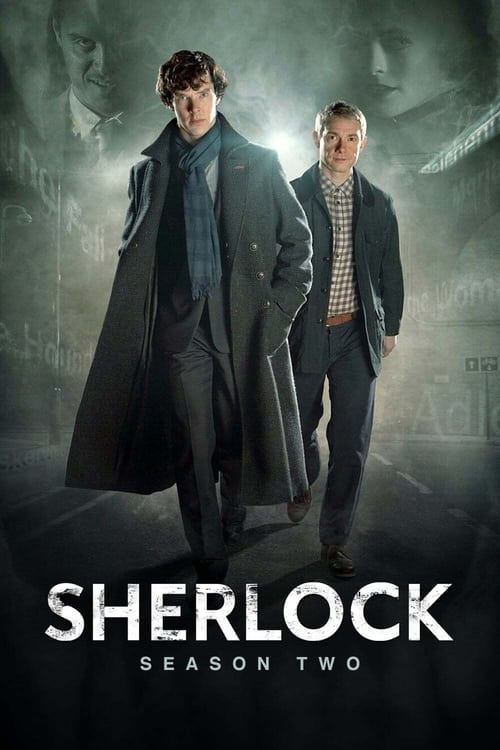
Sherlock
Season 2 Analysis
Season Overview
A Royal scandal, a dazzling game of cat and mouse. The seductive Irene Adler is cold, calculating, brilliant. Has Sherlock finally met his match?
Season Review
Categorical Breakdown
Characters are judged by their intelligence and capability, not by race or immutable characteristics. Casting is largely colorblind in a traditional sense, adhering to meritocracy within the narrative. The main conflict is not based on systemic oppression or white vilification; the principal heroes and villains are white.
The narrative places the British establishment—specifically the Monarchy, Mycroft Holmes's government intelligence, and the military—as either corrupt, incompetent, or manipulative. The government's secret counter-terrorism operations are exposed as morally dubious, suggesting an inherent flaw and deceitfulness in the highest institutions of the home culture. This acts as a clear critique of the national ruling class and institutions.
The character Irene Adler is introduced as the 'Girl Boss' archetype—an immensely intelligent, highly independent dominatrix who is Sherlock's intellectual equal and manipulator. Her professional power is celebrated. However, the plot ultimately strips her of this power by making her formidable password 'SHER,' revealing her emotional surrender to Sherlock. This final narrative move, where the brilliant woman's strength is dissolved by sentimental love for the male protagonist, is a strong counter-signal, but the central character is still a celebrated, anti-family, high-agency female.
Alternative sexualities are a strong and deliberate element. Irene Adler explicitly states she is 'gay' ('No, I'm really very gay'), even while engaging in a sexual and intellectual relationship with Sherlock. Moriarty is portrayed with clear queer coding. Most significantly, the relationship between Sherlock and John Watson is constantly framed in a manner suggesting a deeply intimate, non-heteronormative bond, often through in-universe jokes and misinterpretations that center sexual ambiguity.
The core of Sherlock Holmes's characterization is his 'high-functioning sociopath' label and his devotion to pure, objective reason and science above all else. Moral relativism is highly present, as the character acts outside of societal laws and ethics, believing only in his own intellectual judgment. The show features a specific line implying Sherlock will 'outlive God' in his quest to have the last word, clearly framing the scientific, rational human mind as superior to the concept of the divine.