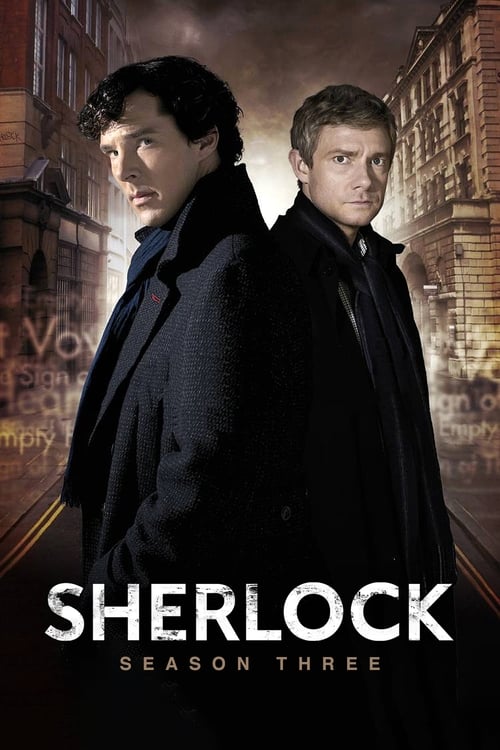
Sherlock
Season 3 Analysis
Season Overview
Sherlock is back, but will things ever be the same again?
Season Review
Categorical Breakdown
The plot centers on the merit and actions of the main characters, who are all part of the established British setting. There is no presence of lecturing on privilege, systemic oppression, or vilification of whiteness. The casting is colorblind in supporting roles, but the focus remains on personal choices and consequences.
The narrative takes place in modern London, treating the environment and institutions, such as the Metropolitan Police and Mycroft's government role, as a functional setting. The main villains are not framed as products of a fundamentally corrupt Western system but as individual criminal masterminds. The show demonstrates respect for the core institutions of its home culture.
The character of Mary Morstan is revealed to be a highly competent former secret agent and assassin who is, in Sherlock's own estimation, as capable as a secret agent can be. This 'Girl Boss' trope makes her instantly proficient in skills like combat and espionage, arguably surpassing the male lead's abilities in action. Sherlock himself is portrayed as being 'softer' and more in touch with his emotions, leading to a degree of character emasculation, though the season culminates in Mary and John's marriage and the announcement of a pregnancy, which is a traditional, pro-natal development.
The season directly incorporates and plays with the fan-theory subtext surrounding the non-sexual but intensely close relationship between Sherlock and John. Jokes and plot points about their supposed homosexuality are frequent, making it an ongoing point of humor and meta-commentary throughout the season. This active teasing of a queer reading moves the show away from a strictly normative structure and centers alternative sexualities as a major source of narrative engagement, even while the primary pairing of John and Mary is heterosexual.
Religion is not a significant factor in the plot or character motivations. The moral framework is generally objective, revolving around the universal good of preventing terrorist attacks or stopping a malicious blackmailer. The characters' morality is secular and based on a higher duty to others, not an embrace of moral relativism, and there is no visible hostility toward religious faith.