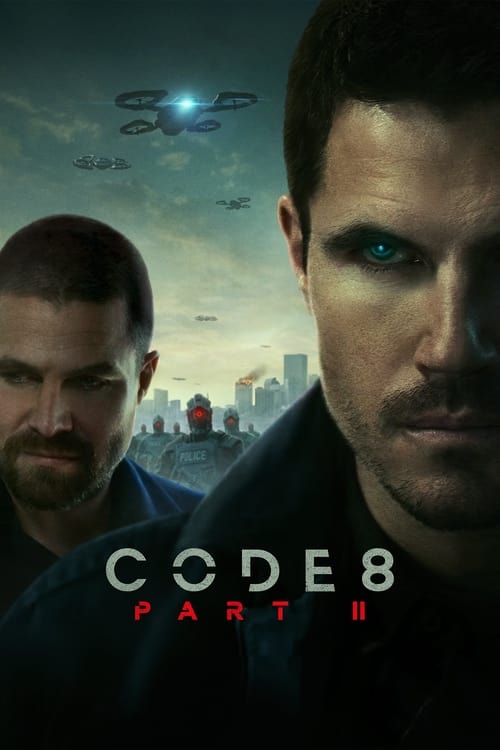
Code 8 Part II
Plot
In a world where superpowered people are heavily policed by robots, an ex-con teams up with a drug lord he despises to protect a teen from a corrupt cop.
Get the Weekly Woke Watchlist
New and trending movies scored for woke bias, preachy messaging, and forced political themes — before you waste your evening.
No spam. One useful email per week.
Overall Series Review
Categorical Breakdown
The plot centers on a marginalized group, the 'People With Powers,' who are systematically oppressed, heavily policed, and kept in poverty by the institutional power of the unpowered majority. This setup functions as a clear allegory for systemic oppression and an intersectional hierarchy, where the PWP status replaces traditional immutable characteristics as the source of marginalization. However, the film avoids the vilification of 'whiteness' as the sole source of evil, since the main protagonists fighting the system are white males, and the primary corrupt villain is a non-white character.
The narrative critiques the 'militarized police state' and 'institutional power' in Lincoln City, framing these elements as fundamentally corrupt and abusive. The film's focus is on the deconstruction of specific governmental and law enforcement institutions, not a blanket demonization of Western civilization, heritage, or ancestors. The protagonists work to expose and reform the corruption within their society, suggesting a desire for justice rather than civilizational self-hatred.
Female characters hold vital positions and possess unique strengths, such as Mina running the community center and making a final sacrifice, and the teenage girl Pavani being the crucial witness and having a rare, disruptive power that exposes the corruption. The plot depends on their actions, but the primary protagonists driving the physical action and redemption arc are two men. The film establishes a complementary team dynamic without presenting the female characters as 'perfect instantly' or actively emasculating the male leads, and it contains no anti-natalism messaging.
The movie does not center on or feature any explicit LGBTQ+ themes, characters, or ideological discussions. The narrative remains focused on the power dynamic between the superpowered minority and the corrupt government/police. The structure is normative, focusing on the core plot without political lecturing on sexual or gender identity.
The conflict is centered on worldly morality, specifically institutional corruption versus personal responsibility and justice. The narrative operates within a traditional framework of objective right and wrong, as the goal is to expose evil and protect the innocent. The film demonstrates no hostility toward traditional religion or anti-theistic themes.
Get the Weekly Woke Watchlist
New and trending movies scored for woke bias, preachy messaging, and forced political themes — before you waste your evening.
No spam. One useful email per week.