Looking for Jackie
Plot
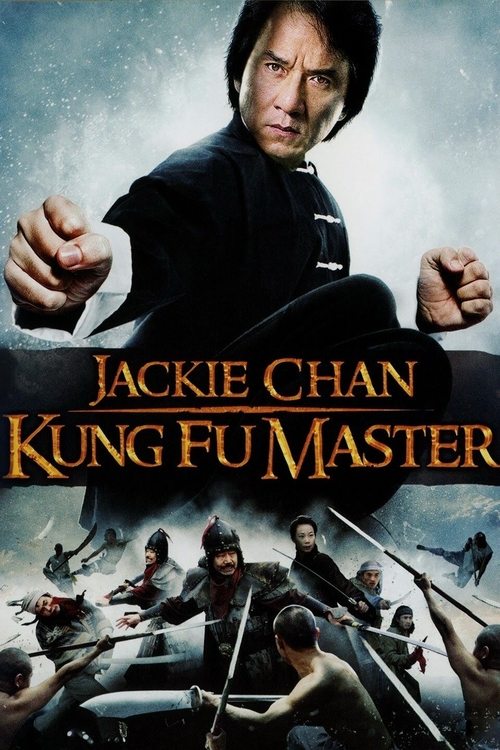
Jackie Chan is the undefeated Kung Fu Master who dishes out the action in traditional Jackie Chan style. When a young boy sets out to learn how to fight from the Master himself, he not only witnesses some spectacular fights, but learns some important life lessons along the way.
Get the Weekly Woke Watchlist
New and trending movies scored for woke bias, preachy messaging, and forced political themes — before you waste your evening.
No spam. One useful email per week.
Overall Series Review
Categorical Breakdown
Characters are judged entirely by their personal conduct and journey toward self-improvement, not by race or immutable characteristics. The cast is authentically Chinese, centering a non-Western cultural figure and tradition without any attempt at 'race-swapping' or anti-White commentary. Meritocracy in martial arts and moral development is the central theme.
The movie is a celebration of Chinese cultural heritage, specifically Kung Fu and a national hero, Jackie Chan. The boy's journey is to the heart of his cultural home (Beijing) to seek knowledge and discipline from a respected master. There is no deconstruction of or hostility toward the home culture or ancestors.
Male characters, Jackie Chan and other men, serve as the primary masters and role models in the martial arts context. The boy’s goal is to become a disciple of a male master. Female characters, such as the grandmother and a police officer who helps him, are presented as protective and functional within a traditional framework. There is no evidence of a 'Girl Boss' trope, emasculation of men, or anti-family messaging; the story advocates for respecting family and elders.
The narrative is a G-rated family adventure focusing on a boy's journey and moral education. The storyline adheres to a traditional, normative structure. There is no centering of alternative sexualities, no discussion of sexual ideology, and no deconstruction of the nuclear family.
The boy takes shelter in a temple early in his journey, which is depicted as a place of safety and traditional culture. Kung Fu philosophy itself emphasizes discipline and morality, aligning with a transcendent moral law. The film's 'life lessons' are moral and objective, not subjectively based on power dynamics. There is no hostility toward religion or spirituality.
Get the Weekly Woke Watchlist
New and trending movies scored for woke bias, preachy messaging, and forced political themes — before you waste your evening.
No spam. One useful email per week.