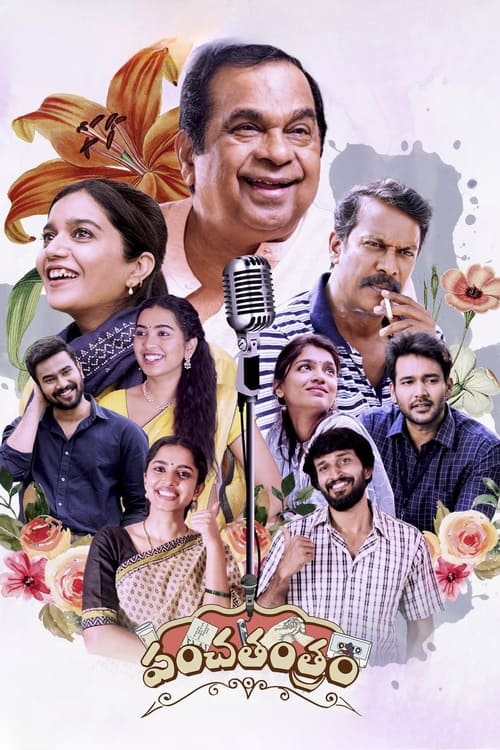
Panchathantram
Plot
Veda Vyas Murthy is a retired All India Radio announcer whose daughter doesn't want him to work any longer. When a publishing house announces a story-narration contest, Veda Vyas' interest to tell stories is kindled. He narrates five different stories with the theme of the five senses: Sight, Smell, Sound, Taste, and Touch.
Get the Weekly Woke Watchlist
New and trending movies scored for woke bias, preachy messaging, and forced political themes — before you waste your evening.
No spam. One useful email per week.
Overall Series Review
Categorical Breakdown
Characters are judged by their personal struggles, talent, and emotional resilience rather than any immutable characteristic. The primary conflict is based on age and professional ambition versus a desire for rest, a struggle of merit and will. The narrative contains no elements of vilifying a specific demographic or lecturing on privilege/systemic oppression.
The film centers on everyday human and family drama within the existing culture, treating family and community institutions as shields against chaos, such as supporting a couple through a life-threatening illness. The plot celebrates the personal pursuit of traditional art forms like storytelling and shows respect for the idea that life can begin at any age, exhibiting gratitude for life's opportunities. There is no deconstruction of heritage or framing of the home culture as fundamentally corrupt.
The stories generally uphold a traditional and complementary view of gender roles and relationships. One story explicitly celebrates motherhood by portraying a baby as a ray of hope for a couple facing a crisis. Male characters are depicted as protective husbands and passionate individuals, not as bumbling or toxic. The daughter's initial resistance to her father's career pursuit is a minor element of control but does not translate into a broader anti-male or 'Girl Boss' trope. Women are depicted with agency, but within a framework that respects family structure and vitality.
The narrative is structurally normative, with central plots focusing on finding a life partner and the strength of a husband and pregnant wife. The family unit presented is the traditional male-female pairing. There is no centering of alternative sexualities, deconstruction of the nuclear family, or lecturing on gender theory.
The core themes revolve around transcendent concepts like peace, will, love, and tenacity in the face of suffering, suggesting an adherence to higher moral law. The narrator is even named after a revered sage from Hindu tradition, implicitly rooting the film in a spiritual and cultural context. The movie is focused on humanistic emotion and struggle, entirely free of hostility toward traditional religion or an embrace of radical moral relativism.
Get the Weekly Woke Watchlist
New and trending movies scored for woke bias, preachy messaging, and forced political themes — before you waste your evening.
No spam. One useful email per week.