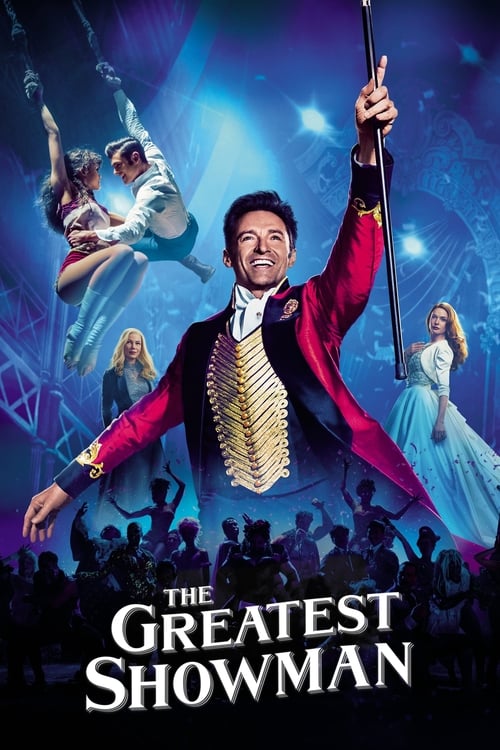
The Greatest Showman
Plot
The story of American showman P.T. Barnum, founder of the circus that became the famous traveling Ringling Bros. and Barnum & Bailey Circus.
Get the Weekly Woke Watchlist
New and trending movies scored for woke bias, preachy messaging, and forced political themes — before you waste your evening.
No spam. One useful email per week.
Overall Series Review
Categorical Breakdown
The plot centers entirely on the liberation of a multiracial and physically diverse ensemble cast, portraying them as marginalized victims of society's bigotry. The climactic anthem is a declaration that self-worth comes from celebrating immutable characteristics. The narrative invents a fictional interracial relationship between a white elite and a Black trapeze artist, which is subjected to violence by white bigots. This completely whitewashes the real P.T. Barnum's history of exploiting enslaved and disabled people, transforming a white male figure into a champion of intersectional outcasts.
The traditional American social elite and 'respectable' high culture are depicted as snobbish, arrogant, and fundamentally corrupt antagonists who despise the circus and its diverse performers. The antagonists are the 'naysayers' and 'thugs' who represent the established, conservative culture, which is implicitly framed as a source of oppression and violence. However, the film still celebrates the American Dream of rags-to-riches entrepreneurial success, which prevents a perfect score.
The main female character, Charity, is a loving wife and mother who is content with a humble life, acting as the moral compass who pulls the male protagonist back to his family. This affirms the value of motherhood and the nuclear family. One secondary character, the Bearded Lady, is the voice of defiance against conventional femininity, but the overall message is one of complementarity, with women fulfilling traditional roles or finding strength outside of careerist ambition.
The core themes revolve around finding a home for those with physical differences and racial backgrounds, not alternative sexualities or gender ideology. The central romantic relationships are strictly heterosexual, and the nuclear family unit is affirmed as the ultimate source of meaning and happiness. The theme of 'being different' is kept broad and does not center on sexual identity issues.
The movie’s moral conflict focuses on the corrupting influence of ambition and the futility of seeking meaning from societal applause, contrasted with the enduring worth of family and genuine loyalty. This is a universal, sentimental morality rather than a spiritual one, but it is not hostile to faith. There is no depiction of religious figures or institutions as villains or sources of bigotry; the opposition is entirely social and class-based.
Get the Weekly Woke Watchlist
New and trending movies scored for woke bias, preachy messaging, and forced political themes — before you waste your evening.
No spam. One useful email per week.