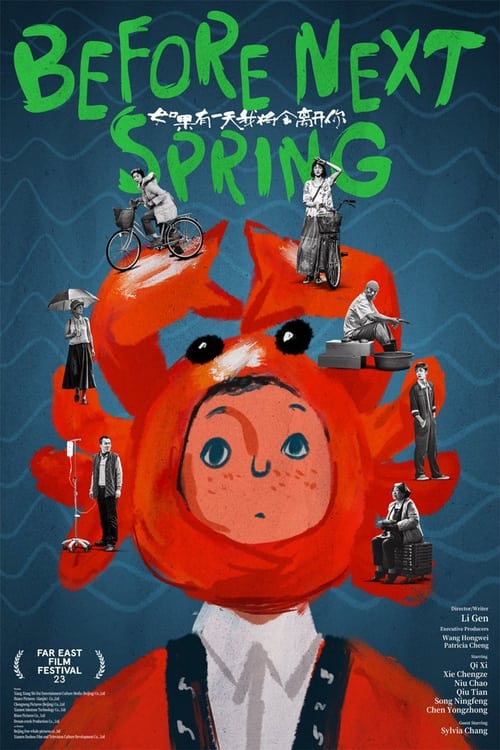
Before Next Spring
Plot
Where is home? For a group of Chinese students studying and working in Tokyo, it might be the Nankokute restaurant whose manager has been in Japan for years without ever managing to obtain a residence permit. The cook left his family in China and hasn't yet managed to have them brought over to join him and one waiter's father is sick while the other's is a violent alcoholic. An engaging fresco of everyday life with touching moments and an authentic, natural atmosphere.
Get the Weekly Woke Watchlist
New and trending movies scored for woke bias, preachy messaging, and forced political themes — before you waste your evening.
No spam. One useful email per week.
Overall Series Review
Categorical Breakdown
The plot centers on the challenges faced by Chinese immigrants and students in Japan, which naturally involves a theme of group identity and 'red tape' discrimination based on nationality and legal status. The film illustrates difficulties for Chinese immigrants in determining if they will ever truly feel at home in Japan, touching on cultural differences and occasional hostility from the host country. This focus is on national and migrant identity struggles, not the intersectional hierarchy or vilification of 'whiteness' as defined in the 10/10 descriptor. Character merits are a major factor in their ability to cope and form relationships, moving the score away from the extreme 'woke' end.
The film is a Chinese production about Chinese people. It does not display hostility toward Western civilization, one's home, or ancestors. Characters experience nostalgia and miss 'the warmth in life and family love at home' in China. The outside culture, Japan, is shown with a balance that includes both bureaucratic difficulties and opportunities for human connection, such as a Chinese student becoming close to a Japanese couple who run a barbershop. The core institutions of family and nation (China) are viewed with warmth and longing.
The female manager, Guan Wei, is portrayed as a 'burdened yet determined' boss who runs the restaurant and tries to help new workers like Li Xiaoli. Her story includes a subplot where her unmarried status is cited as a reason for being denied permanent residency, and she has a fight with her boyfriend over having children after a health scare. This creates a narrative centered on a woman's struggle between career, self-determination, and the cultural/legal pressures of traditional family structure and motherhood. The male characters are flawed (e.g., one is a 'damaged Chinese-Japanese bad boy,' another is an undocumented immigrant, and the new student is clumsy) but not depicted as uniformly toxic or bumbling idiots.
The plot contains no discernible themes related to alternative sexualities, gender ideology, or the deconstruction of the nuclear family. The romantic subplots that exist are conventional, focusing on a traditional male-female pairing and a romantic rivalry between two men for a female classmate. The primary family-related conflict revolves around the manager's marital and child-bearing status due to legal/cultural pressures and an older cook's inability to bring his wife and children over from China.
The film's focus is entirely secular, dealing with material and emotional struggles of migrant life: legal status, finances, work, family issues, and romance. There is no mention of religion, hostility toward Christianity, or discussion of objective morality in the plot summaries. The conflicts are grounded in daily life and bureaucratic obstacles, which are morally neutral and do not suggest an embrace of anti-theistic or moral-relativist themes.
Get the Weekly Woke Watchlist
New and trending movies scored for woke bias, preachy messaging, and forced political themes — before you waste your evening.
No spam. One useful email per week.