Caterpillar
Plot
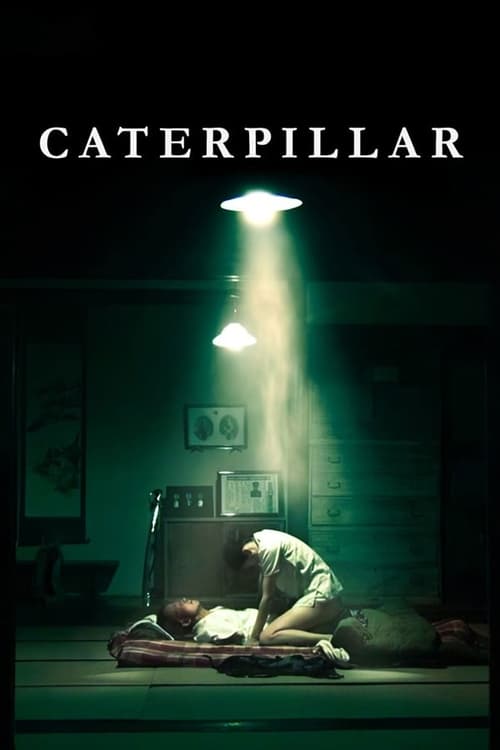
The story of a village woman given the grueling task of looking after (and fulfilling the sexual needs of) her quadruple amputee husband, a Japanese soldier in the Second Sino-Japanese War who has been decreed a "War God" by the Emperor.
Get the Weekly Woke Watchlist
New and trending movies scored for woke bias, preachy messaging, and forced political themes — before you waste your evening.
No spam. One useful email per week.
Overall Series Review
Categorical Breakdown
The plot's central conflict is an intersectional power dynamic: the oppressed Japanese wife (female/domestic) vs. the privileged Japanese soldier (male/military/national symbol). The narrative is driven by the vilification of the powerful male identity; the soldier is shown committing heinous war crimes and domestic abuse. The story exists to lecture on the systemic oppression inherent in the militarist-patriarchal structure, making the soldier’s immutable characteristics (male, privileged rank) the core of his monstrousness.
The movie is explicitly and consistently anti-nationalist and anti-war, aiming to demolish the cultural pride and heritage of the Empire of Japan. Japanese society, from the highest propaganda to the village's traditions, is framed as fundamentally corrupt, hypocritical, and complicit in atrocities. The 'War God' soldier, the symbol of the home country's sacrifice, is revealed as a rapist, a war criminal, and a domestic tyrant, making the home a prison and the nation a machine of destruction.
The female protagonist is a victim whose primary character arc is her mental and emotional decline under the oppressive weight of her mandatory role. The film depicts the expectations of a 'dutiful wife' and motherhood (making 'boy babies') as a form of servitude and a literal prison. The male character is portrayed as an unrepentant chauvinist and abuser, whose emasculation by injury only makes his demands more animalistic and toxic. This fully embraces the critique of traditional gender roles and the male-female relationship as fundamentally a power dynamic of oppression.
The story is entirely focused on the deconstruction of the traditional male-female pairing within the nuclear family unit in the context of war propaganda. There is no presence of alternative sexualities, gender ideology, or the deconstruction of biological reality in the contemporary 'Queer Theory' sense, keeping the score very low.
The husband is officially decreed a 'War God' (a pseudo-religious, state-sanctioned spiritual title) by the Emperor. The film's entire purpose is to expose this deified figure as a grotesque pile of flesh, a war criminal, and an object of repulsion. This is a complete deconstruction and demonization of the central spiritual and moral pillar of the wartime society. It frames the national ideology, the source of moral law in that context, as utterly bankrupt, aligning with the highest score for its direct attack on the transcendent morality (the Emperor/War God's decree) of the culture.
Get the Weekly Woke Watchlist
New and trending movies scored for woke bias, preachy messaging, and forced political themes — before you waste your evening.
No spam. One useful email per week.