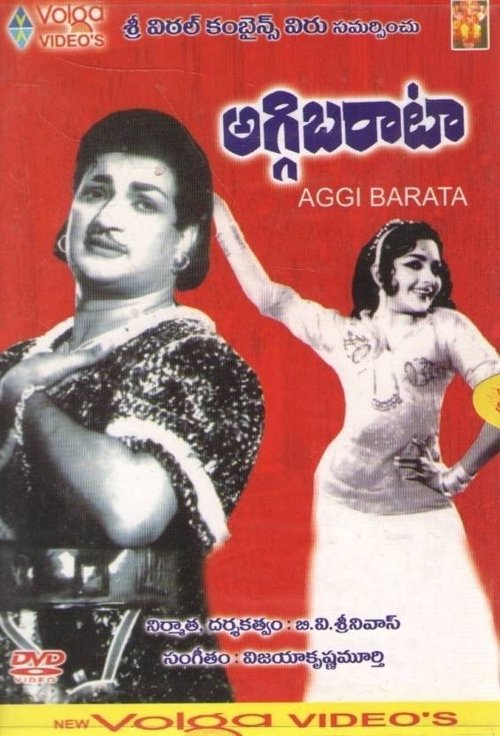
Aggi Barata
Plot
A young warrior, Raja, is threatened by an evil general, Gajapathi, who exploits innocent subjects. At the same time, he must also save Princess Vasavi from the general's hands.
Get the Weekly Woke Watchlist
New and trending movies scored for woke bias, preachy messaging, and forced political themes — before you waste your evening.
No spam. One useful email per week.
Overall Series Review
Categorical Breakdown
Characters are judged strictly by moral merit: Raja is gallant and Gajapati is demonic. The conflict is purely over tyrannical corruption versus heroism, with no discernible emphasis on intersectional hierarchies, race, or immutable characteristics defining the heroes or villains.
The entire narrative is a defense of the home kingdom, Amaravati, and its rightful King. The hero works to protect the core institutions and restore order against a single corrupt internal figure, explicitly demonstrating loyalty and gratitude toward the civilization, not self-hatred.
The hero, Raja, is a protective masculine figure designated as the princess's protector, and the plot culminates in a traditional marriage, celebrating a normative, complementary gender dynamic. There is no emasculation of the male lead or anti-natal/anti-family messaging.
The narrative centers on the traditional male-female pairing of Raja and Princess Vasavi, with the explicit goal of their union (splicing/marriage). The movie maintains a normative structure, contains no deconstruction of the nuclear family, and avoids all discussion of sexual or gender ideology.
The primary villain, Gajapati, is described as 'demonic,' establishing a framework of transcendent moral good versus spiritual evil. The story of justice and heroism is rooted in objective truth and a clear, higher moral law, not moral relativism or hostility toward faith.
Get the Weekly Woke Watchlist
New and trending movies scored for woke bias, preachy messaging, and forced political themes — before you waste your evening.
No spam. One useful email per week.