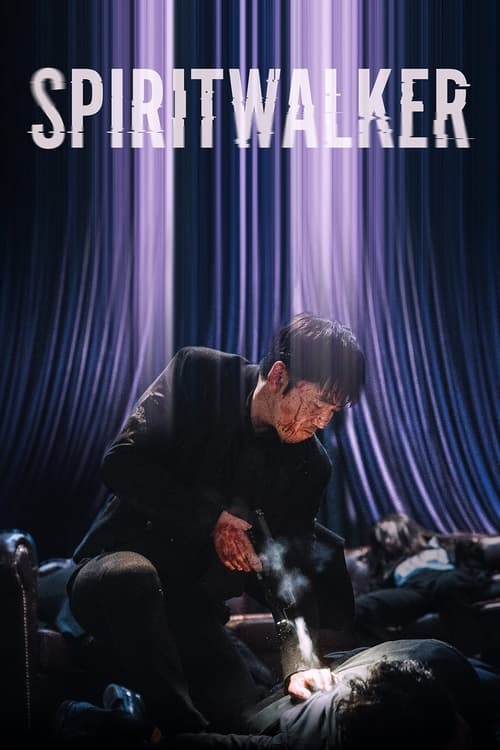
Spiritwalker
Plot
Unable to remember anything about his life, a man begins regaining consciousness in a new body every 12 hours. Now, he must piece together his identity, all while evading attacks from pursuing agents and dangerous criminals alike.
Get the Weekly Woke Watchlist
New and trending movies scored for woke bias, preachy messaging, and forced political themes — before you waste your evening.
No spam. One useful email per week.
Overall Series Review
Categorical Breakdown
The plot's central question is the amnesiac protagonist's personal identity (who is he?), independent of race or group affiliation. The cast is Korean, fitting the setting of a South Korean thriller, showing authentic and colorblind casting. Character motivations are entirely driven by a corporate-conspiracy plot, not intersectional status or immutable characteristics. Merit, defined by the protagonist's pre-existing combat skills and determination to survive, drives the action.
The film focuses on a corporate and criminal conspiracy within modern South Korea. The narrative shows no hostility toward South Korean civilization, culture, or ancestors. Institutions and society are neither celebrated nor demonized; they simply form the backdrop for the action and the corrupt elements of a high-stakes conspiracy. The conflict is internal to the plot's world, not a critique of civilizational heritage.
The core relationship centers on the male protagonist and his girlfriend, Moon Jin-ah, who functions as the emotional center of his lost memory and the object of his quest. The female lead is not portrayed as an instantly perfect 'Mary Sue,' nor are all males depicted as uniformly bumbling or toxic. The gender dynamics are traditional for a mystery-action film, with the hero fighting to protect his relationship and uncover his past. A slight elevation in score accounts for the female lead's competence in providing assistance and information, a common trope in the genre.
The story follows the spiritual consciousness of a male protagonist who is consistently driven to reunite with his girlfriend. The body-swapping mechanism is purely a plot device for action and mystery, not a vehicle for exploring sexual identity or gender ideology. The nuclear family or traditional male-female pairing is neither deconstructed nor is there any political lecturing on alternative sexualities. The structure is normative and focused on a heterosexual relationship.
The movie is a secular action-thriller with no overt religious themes or spiritual commentary. The conflict involves a shadowy corporation and crime, not organized religion. Faith is not a source of strength for the characters, but it is also not vilified. Morality is a clear battle between the protagonist's righteous quest and the villains' corrupt actions. The score reflects a neutral spiritual vacuum typical of a genre film, which neither celebrates a transcendent morality nor actively campaigns against traditional religion.
Get the Weekly Woke Watchlist
New and trending movies scored for woke bias, preachy messaging, and forced political themes — before you waste your evening.
No spam. One useful email per week.