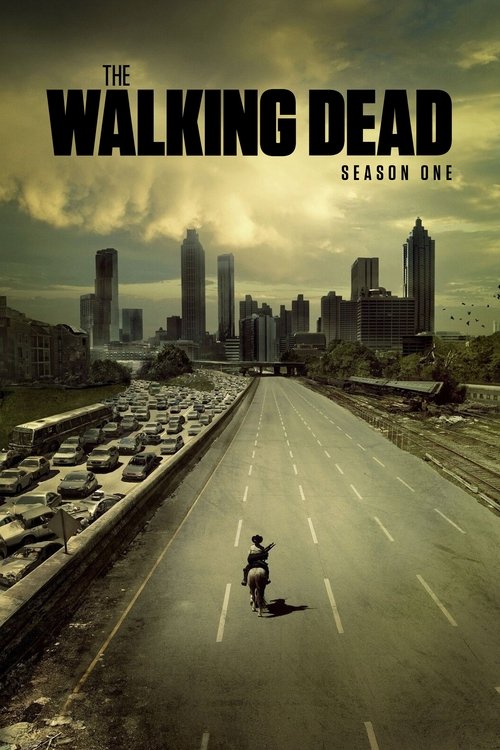
The Walking Dead
Season 1 Analysis
Season Overview
Rick Grimes wakes up from a coma to a world overrun by zombies, on a journey to find his family he must learn to survive the streets of post-apocalyptic Atlanta.
Season Review
Categorical Breakdown
The core group of survivors is racially diverse, but competence is the sole measure of a character's worth; for example, Glenn is valued for his resourcefulness, and T-Dog is a capable survivor. The only character whose race is a focus is Merle Dixon, an openly racist white male, and his racism is immediately condemned and actively punished by the group's protagonist, Rick Grimes. The narrative does not lecture on systemic oppression or white privilege; all characters face the same existential threat.
The plot's primary motivation is to preserve and protect the nuclear family and to find a secure place (a 'home') against the chaos of the outside world. Institutions like family and the moral code of the 'old world' are the values the protagonist, Rick, fights to uphold. The series focuses on the need to rebuild and cling to civilization, not self-hatred or the demonization of one's heritage.
Gender roles are largely traditional for the early apocalypse setting, with men often taking on protective and hunting roles, and women handling caregiving and support, while showing individual toughness. Lori's primary narrative function is wife and mother, and Carol is portrayed as a victim of domestic abuse, not a 'Girl Boss' figure. Masculinity, embodied by Rick, is protective and essential for the group's stability, while the decay of morality is shown through the toxic behavior of a central character, Shane, whose flaws are presented as personal and moral, not an indictment of all men.
No major or minor characters are defined by a non-normative sexual identity or orientation. The focus of interpersonal relationships is exclusively on heterosexual pairing and the preservation of the nuclear family. There is no presence of gender ideology or discussion of alternative sexualities within the six-episode season's plot.
The main moral struggle is a clear and objective battle between humanity and inhumanity, survival and moral decay. The show's moral framework is transcendent, acknowledging objective good and evil by consistently judging a character's descent into depravity (like Shane's actions) as universally wrong. While religion is not a central theme, faith is not vilified; the narrative is focused on what lines people draw to preserve their soul, implying a higher moral law.