The Walking Dead
Season 5 Analysis
Season Overview
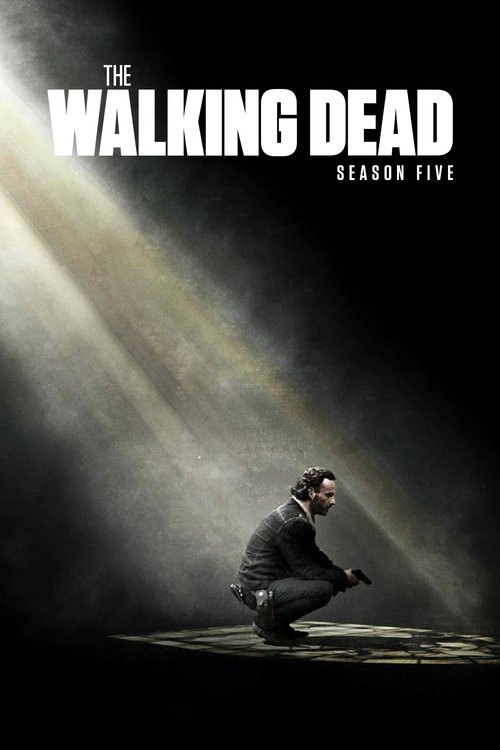
After the season 4 finale left most of the main characters at the mercy of the sadistic inhabitants of Terminus. Season 5 will offer new directions for the group of survivors as scientist Eugene Porter promises a cure to the zombie virus if he can be safely escorted to Washington DC, but getting there is easier said than done.
Season Review
Categorical Breakdown
Characters are judged primarily by their competence and willingness to survive, reflecting a meritocratic view of the post-apocalypse. The main group is racially diverse, with Black and Asian characters holding prominent, complex roles. The story focuses on the question of who the characters become, rather than lecturing on privilege or systemic oppression. No characters are race-swapped, and the narrative does not rely on race to signal virtue or villainy. The primary antagonists of the first half, the cannibals of Terminus, are almost entirely White, but their villainy is universal and based on nihilistic brutality.
The central goal of the season is the quest to find and establish a permanent, safe place to call home, with the Alexandria Safe-Zone becoming the objective. This desire for stability and a walled community directly counters civilizational self-hatred. The naive residents of Alexandria are framed as needing the competence of Rick's group for their community to survive, positioning institutions and home as worth fighting for, not fundamentally corrupt. The theme of family and community serving as a shield against chaos is consistently maintained.
Strong female characters like Carol and Michonne are highly capable and take on protector and leadership roles. Carol, in particular, demonstrates extreme competence, cunning, and intelligence, even masquerading as a meek housewife to maintain a tactical advantage in Alexandria. This pushes against the emasculation trope by showing women as effective warriors. The new leader of Alexandria, Deanna Monroe, is a woman whose diplomatic and inclusive leadership style is depicted as fundamentally too naive for the post-apocalyptic world. A female hospital leader, Officer Dawn Lerner, acts as a corrupt antagonist whose all-or-nothing ideology is portrayed as inherently flawed.
The Alexandria Safe-Zone introduces Aaron, a White, gay man, and his male partner, Eric, who are portrayed as a stable, loving couple. Their sexual identity is presented as a fact of their lives and does not serve as a central plot point, ideological lecture, or focus for conflict. They are integrated into the community without their pairing being used to deconstruct the concept of family.
The character of Father Gabriel Stokes, an African-American priest, is introduced. He is immediately established as morally compromised and cowardly, having barricaded himself and let his congregation die. His actions throughout the season include attempting to betray the main group by telling Alexandria's leader that Rick and his people cannot be trusted. This depiction uses the one prominent religious figure as a symbol of weakness, hypocrisy, and betrayal, aligning with the trope of portraying traditional Christian characters as flawed or antagonistic. Carol states she is agnostic, adding to the theme that faith is a failed construct in the new world.