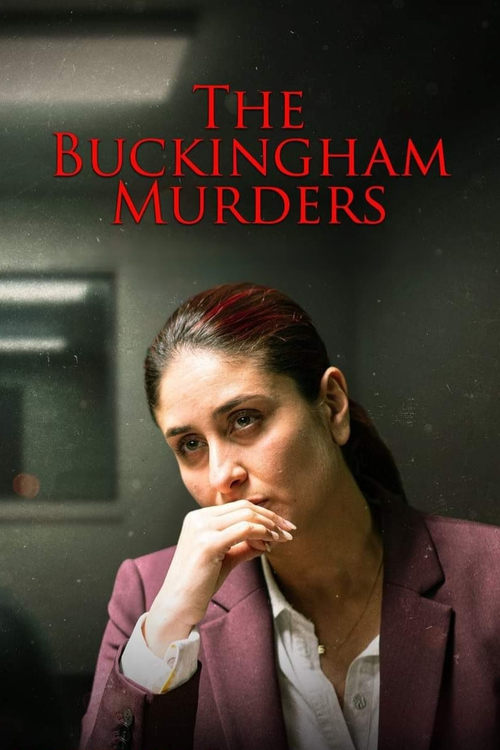
The Buckingham Murders
Plot
Fresh wounds are reopened when Jasmeet Bhamra, a cop and a single mother who recently lost her child in a shooting spree, transfers to High Wycombe and is assigned a case of a missing child.
Get the Weekly Woke Watchlist
New and trending movies scored for woke bias, preachy messaging, and forced political themes — before you waste your evening.
No spam. One useful email per week.
Overall Series Review
Categorical Breakdown
The plot centers on a non-white protagonist and uses the missing child case to explore a 'polarised conflict between the Hindu and Muslim communities' in Britain, directly leaning on ethnic and religious group identity as the main source of social friction. The protagonist's non-white identity and grief are integral to her isolated perspective on the case and community issues.
The film critiques the local police system and portrays the British setting as bleak and melancholic. The core civilizational conflict, however, stems from diasporic communal tensions (Hindu vs. Muslim) rather than a wholesale demonization of Western history, ancestors, or fundamental institutions.
The lead is a highly competent female police detective, which fulfills the 'Girl Boss' trope. The narrative explicitly notes the pervasiveness of 'patriarchy' and unacknowledged female grief. This is balanced by the protagonist's main driver being profound, universal maternal grief over the loss of her son, which counters a strong anti-natalist message.
The narrative focuses exclusively on themes of grief, communal tensions, a missing child, and police procedure. There is no presence of alternative sexualities, deconstruction of the nuclear family beyond the tragedy that created the single mother status, or gender theory lecturing.
The core social commentary involves 'religious issues' and communal violence inspired by Hindu-Muslim conflict. Religion is framed as a source of division and 'noise' in a patriarchal environment, suggesting it is a negative societal force rather than a source of strength or objective moral law.
Get the Weekly Woke Watchlist
New and trending movies scored for woke bias, preachy messaging, and forced political themes — before you waste your evening.
No spam. One useful email per week.