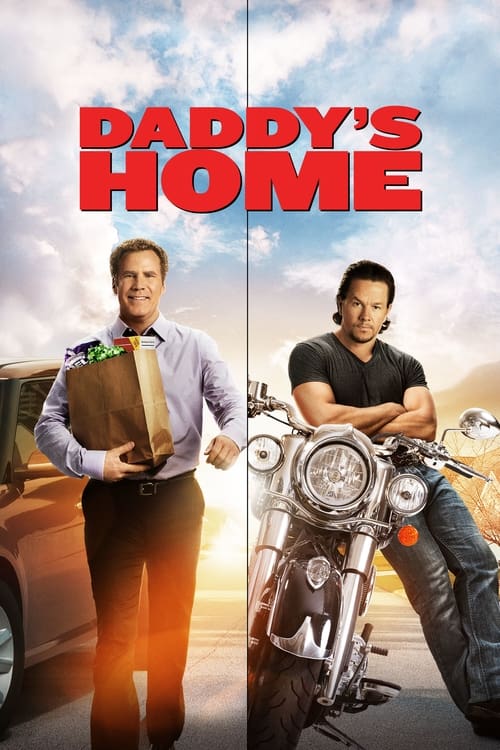
Daddy's Home
Plot
The story of a mild-mannered radio executive who strives to become the best stepdad ever to his wife's two children, but complications ensue when their freewheeling, freeloading real father arrives, forcing stepdad to compete for the affection of the kids.
Get the Weekly Woke Watchlist
New and trending movies scored for woke bias, preachy messaging, and forced political themes — before you waste your evening.
No spam. One useful email per week.
Overall Series Review
Categorical Breakdown
The central conflict revolves around two white male archetypes competing over personality and parenting style—the 'beta' versus the 'alpha.' The narrative does not utilize race, intersectional hierarchy, or privilege as a source of conflict or a topic for lecturing. Characters are judged solely by their character merit as fathers, and the ultimate resolution advocates for merit (good parenting) over simple biology. A supporting Black character is present as a neutral friend/contractor, not as a tool for political messaging.
The plot's sole purpose is the stabilization and protection of the family and home unit, which is framed as the ultimate good for the children. The domesticated, safe home life established by the stepdad is challenged by the bio-dad's chaotic, rootless lifestyle, but the resolution sees the men forming a blended, new family structure that preserves the domestic unit. There is no hostility toward the home, Western culture, or ancestors.
The score is elevated because the comedy heavily relies on the emasculation and humiliation of the male protagonists. Brad is an openly soft, crying, simpering wimp, constantly made fun of by both the kids and Dusty. However, the female lead, Sarah, is not a 'Girl Boss' figure but rather the stable matriarch and voice of reason. A key subplot revolves around Sarah's deep and fulfilled desire to have another baby, which strongly counters the anti-natalism trope, instead celebrating motherhood and fertility.
The core of the story is the struggle to establish a functional, heterosexual, two-parent family unit, explicitly centered on the traditional male-female pairing. The themes of 'virility' and biological parenthood are central to the conflict and jokes, but no alternative sexualities, gender identities, or queer theory is introduced. The structure remains entirely normative with a focus on biological reality.
There is no presence of anti-theistic or religious themes in the film. The moral arc focuses on the secular virtue of responsibility, duty, and commitment to fatherhood. The film embraces an objective truth regarding the moral obligation of fathers to their children, providing a clear moral law for the characters to ultimately follow.
Get the Weekly Woke Watchlist
New and trending movies scored for woke bias, preachy messaging, and forced political themes — before you waste your evening.
No spam. One useful email per week.