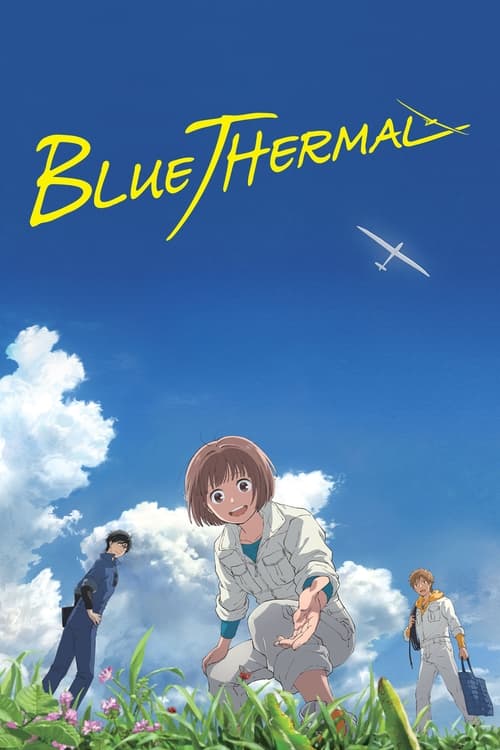
Blue Thermal
Plot
Tamaki becomes a captive of the vast beauty of the skies from the moment Kuramochi takes her under his wing and up for a flight in a glider.
Get the Weekly Woke Watchlist
New and trending movies scored for woke bias, preachy messaging, and forced political themes — before you waste your evening.
No spam. One useful email per week.
Overall Series Review
Categorical Breakdown
The plot is focused on the personal merit and skill of the protagonist, Tamaki, as she trains to become a competitive glider pilot. The setting and all characters are Japanese, which entirely bypasses the Western-centric issue of 'vilification of whiteness' and 'race-swapping.' The story emphasizes personal struggle and talent development rather than systemic oppression or intersectional hierarchy.
The film is a Japanese production set in a Japanese university and focuses on the pursuit of a specific hobby—gliding—within a local cultural and institutional framework. There is no evidence of hostility toward Western civilization, its institutions, or ancestors. The dramatic conflicts are personal and relate to club dynamics, family pressure, and competitive sportsmanship, not civilizational self-hatred.
The protagonist, Tamaki, is a female lead in a technically demanding sport. However, she is not instantly perfect; she is described as 'hapless at first' and prone to emotional outbursts, indicating a learning curve and character development. The male club captain acts as a kind mentor who sees her potential. The plot features a clear romantic subplot with a love triangle, and the men are portrayed as capable, protective teammates and competitors. The film emphasizes a career in a sport but does not contain messaging that motherhood is a 'prison,' earning a low, but not perfect, score for the focus on the female lead's personal achievement.
The narrative centers on a traditional love triangle between the female protagonist and two male characters. Reviews and plot summaries contain no mention of centering alternative sexualities, deconstructing the nuclear family as an institution, or any lecturing on gender ideology. Sexuality remains a private aspect of the main character's desire for college romance, which adheres to a normative structure.
The film is a university sports/slice-of-life drama. There are no overt religious themes or conflicts. It does not contain hostility toward religion, nor does it feature moral relativism as a thematic focus. The core moral framework is the objective truth of competition rules and the personal ethics of hard work and self-improvement.
Get the Weekly Woke Watchlist
New and trending movies scored for woke bias, preachy messaging, and forced political themes — before you waste your evening.
No spam. One useful email per week.