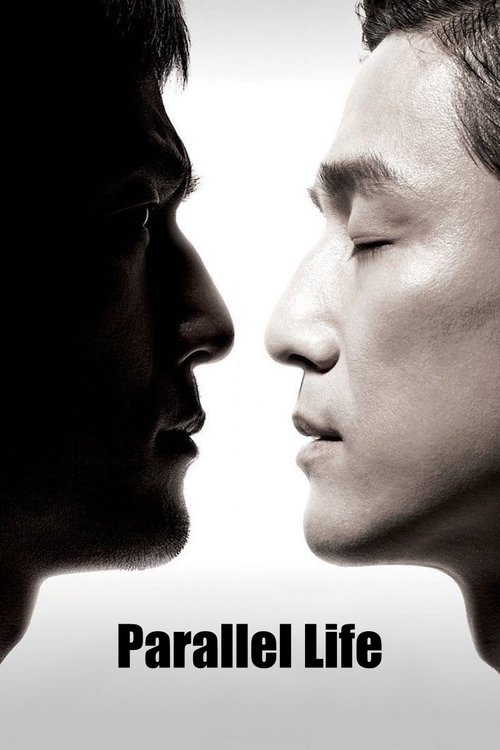
Parallel Life
Plot
A young man finds out that he is living a completely identical life to another man who lived decades ago. And when his wife is murdered the same way as the previous man's, he decides to dig into the older case to find clues about who was the murderer this time.
Get the Weekly Woke Watchlist
New and trending movies scored for woke bias, preachy messaging, and forced political themes — before you waste your evening.
No spam. One useful email per week.
Overall Series Review
Categorical Breakdown
The movie is a South Korean production featuring a cast of Korean characters. The plot is focused solely on a professional judge's personal and legal crisis. There is no presentation of an intersectional hierarchy, critique of 'whiteness,' or forced diversity, as the narrative is set in a culturally homogenous context and driven by merit and revenge.
The film's setting is South Korea, and the conflict is an internal one concerning the judicial system, fate, and a revenge plot. There is no hostility or critique directed toward Western civilization, its institutions, or its ancestors. The narrative does not frame the Korean setting or its social systems as fundamentally corrupt in a civilizational self-hatred sense.
The main female characters are the judge's wife and daughter, whose safety drives the male protagonist's investigation and determination. The wife is a tragic victim whose death initiates the plot, and the daughter is the person the hero must save. The movie celebrates the protective role of the father and the importance of the nuclear family. There is no presence of the 'Girl Boss' trope, emasculation of males, or anti-natalist messaging.
The story centers on a traditional male-female marriage and the nuclear family unit (father, mother, daughter) being threatened by a criminal. Sexual identity is not a part of the plot, characters, or themes. The film adheres to a normative structure without introducing or lecturing on alternative sexualities, gender ideology, or deconstructing the family unit.
The core philosophical conflict revolves around the concept of 'parallel life theory' and destiny, which is a secular/metaphysical question, not a theological one. The movie contains no critiques of organized religion, specifically Christianity, and does not position religious characters as villains or bigots. Morality is framed around justice, law, and preventing murder, which points toward an objective, higher moral law against crime.
Get the Weekly Woke Watchlist
New and trending movies scored for woke bias, preachy messaging, and forced political themes — before you waste your evening.
No spam. One useful email per week.