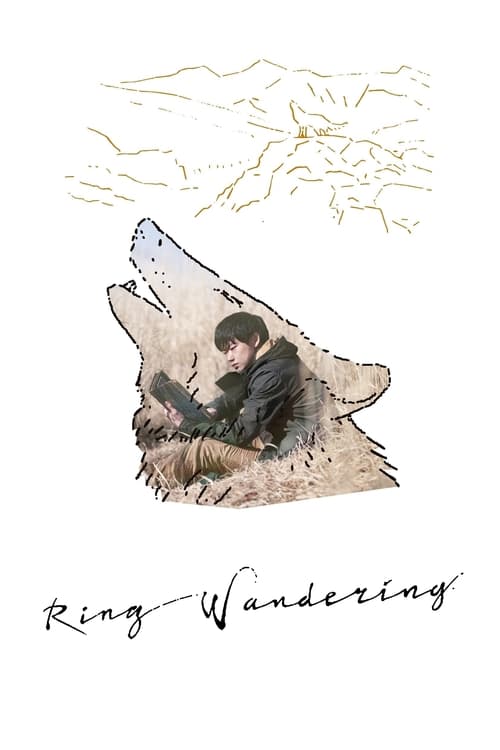
Ring Wandering
Plot
In central Tokyo, a young man, Sosuke, aspires to be a manga artist. His current work is about a battle between a hunter and a Japanese wolf. He can’t draw the extinct wolf well and struggles to develop the story. One winter’s day, Sosuke finds an animal’s skull while digging foundations at a construction site and takes it home. Is it a Japanese wolf’s skull?
Get the Weekly Woke Watchlist
New and trending movies scored for woke bias, preachy messaging, and forced political themes — before you waste your evening.
No spam. One useful email per week.
Overall Series Review
Categorical Breakdown
The narrative focuses on a Japanese protagonist's personal and spiritual quest to connect with his nation’s forgotten past. Character identities are not defined by an intersectional hierarchy, and the cast is entirely homogeneous and historically authentic to the setting. The plot is driven by artistic and historical themes, not lectures on privilege or systemic oppression.
The film criticizes modern Japanese society's tendency to build over and forget the 'unpleasant or inconvenient' past, especially the trauma of the WWII air raids. This is a critique of capitalist-driven historical amnesia and modern 'relational emptiness,' not a wholesale demonization of Japanese ancestors or core institutions. The goal is to remember the sacrifices of the dead and restore national memory, which aligns with Gratitude rather than civilizational self-hatred.
The male protagonist, Sosuke, is an emotionally struggling artist who is led into a transcendent journey by the female co-star, Midori, a 'lively and curious' woman. Their relationship is tender, complementary, and a source of connection and growth for the male lead. The female character is a guide to the spiritual and historical past, not an instantly perfect 'Girl Boss' who emasculates the male lead. There is no anti-natalist or anti-family messaging.
The core of the story is centered on a normative, blossoming romantic connection between a man and a woman as they explore a shared spiritual and historical space. There is no presence of sexual ideology, deconstruction of the nuclear family, or focus on transitioning or framing biological reality as bigotry. Sexuality remains private and is not the central theme of the narrative.
The narrative embraces the transcendent and spiritual. The protagonist's journey into the past is catalyzed by passing through a Shinto torii gate, which is explicitly described as marking the entrance to a 'sacred space, rich with nature spirits and gods.' Faith and spiritual connection to the land and the dead are portrayed as the key to overcoming the protagonist's emotional and creative vacuum, directly opposing an anti-theistic worldview.
Get the Weekly Woke Watchlist
New and trending movies scored for woke bias, preachy messaging, and forced political themes — before you waste your evening.
No spam. One useful email per week.