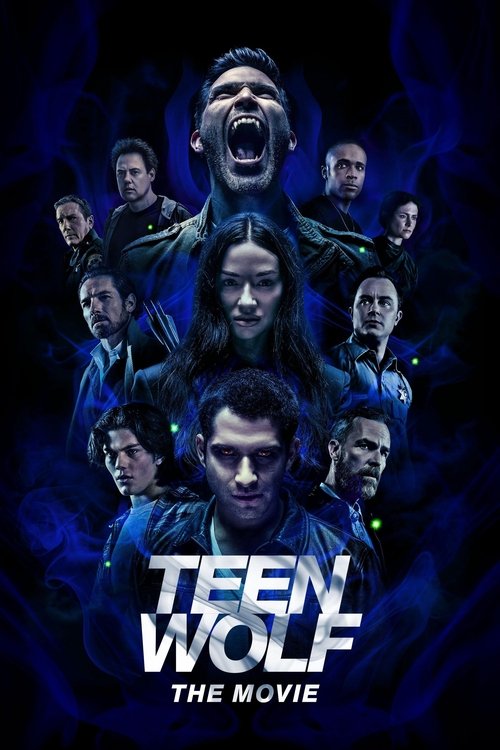
Teen Wolf: The Movie
Plot
The wolves are howling once again, as a terrifying ancient evil emerges in Beacon Hills. Scott McCall, no longer a teenager yet still an Alpha, must gather new allies and reunite trusted friends to fight back against this powerful and deadly enemy.
Get the Weekly Woke Watchlist
New and trending movies scored for woke bias, preachy messaging, and forced political themes — before you waste your evening.
No spam. One useful email per week.
Overall Series Review
Categorical Breakdown
The core group already includes a mixed-race Alpha male lead, but the character of Kira (a Japanese-American Kitsune) is absent, and a new Asian Kitsune character, Hikari, is introduced to fill a similar role. This shift, following reports of an alleged salary dispute with the previous actress, suggests casting decisions are subject to modern diversity pressures rather than pure meritocracy. The main conflict, however, does not center on themes of race or systemic oppression.
The entire premise is the return of the pack to their hometown, Beacon Hills, specifically to defend it from a terrifying, non-Western, mythological evil, the Nogitsune. The narrative champions the idea of protecting one's home and community against chaos. There is no deconstruction or demonization of Western heritage or ancestors.
Female characters like Lydia and Malia are consistently powerful and essential to the plot, but Allison's resurrection re-centers the narrative around Scott's romantic longing, undoing her prior character arc and heroic death. The long-established relationship between Lydia and Stiles is abruptly dissolved off-screen due to a supernatural premonition, positioning a non-romantic, powerful female character's life's major decision as an avoidance of her male partner's fate. The plot introduces a positive father figure in 'Dad Derek,' which provides a counter-balance to anti-natalist messaging.
The character of Jackson Whittemore is now shown to be in a long-term male-male relationship, a natural continuation from the series finale. More notably, the character's past abusive and toxic behavior is retroactively explained by a character as being the result of him struggling with internalized homophobia from being in the closet, linking prior male toxicity directly to a queer theory lens. This centers an alternative sexuality with a major narrative retcon.
The conflict is entirely based on a pre-Christian mythological framework involving Werewolves, Kitsunes, Banshees, and a 'bardo' (a non-Western spiritual state) for the dead. The story operates on a transcendent spiritual and mythological plane without featuring any hostility toward traditional organized religion, which is virtually absent from the narrative.
Get the Weekly Woke Watchlist
New and trending movies scored for woke bias, preachy messaging, and forced political themes — before you waste your evening.
No spam. One useful email per week.